Ramshackle inns and sailor bars
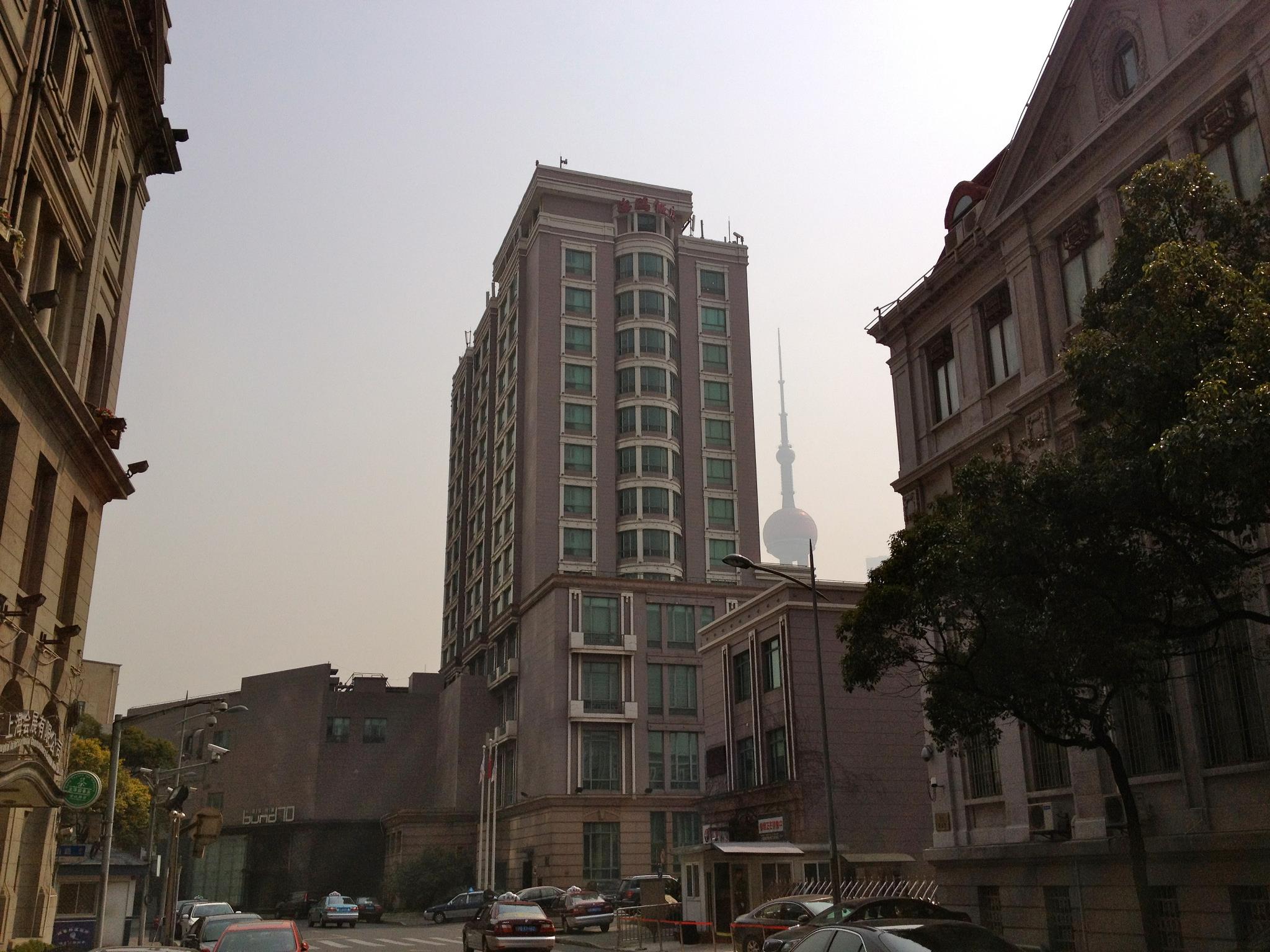
The first hotel I stayed at in China was the Seagull in Shanghai in 1990. Across the street was the famous Astor House, established in 1846 (now the China Securities Museum), in the former American Concession (now the North Bund). The only thing I recall about the hotel is having to hand my key over to a floor attendant manning a desk in the hallway whenever leaving my room. Also in the hallway was a rack with multiple copies of a booklet translated into English on the correct interpretation of the “Tiananmen Incident” in Beijing the previous year. Stationing attendants on every floor made it difficult to smuggle unapproved guests into your room, namely Chinese nationals of the opposite sex. Apart from these quirks, even by then China could be said to have come a long way in bringing its hotels up to minimally acceptable standards.
It had only been a few years since individual tourists from abroad, as opposed to chaperoned groups, were allowed into the country at all. In fact, travel to China for either employment or tourism purposes had begun to peter out at the start of World War Two under the Japanese occupation. For around fifty years, until around the time of my visit, China was a closed country.
In the four decades prior to that, going back to the turn of the twentieth century, if you were not lucky or wealthy enough to reside in the foreign concessions of Shanghai and other port cities or Beijing’s Legation Quarter, conditions in the sailor bars and the few other establishments willing to put you up would have been stark. The film The Sand Pebbles (dir. Wise, 1966), based on Richard McKenna’s naval sojourn in 1930s China as fictionalized in his novel of the same name, portrays the prevailing conditions in haunting fashion.
Another eyewitness account comes from Qian Zhongshu’s catalog of ramshackle inns in his novel A Fortress Besieged (1947), chronicling protagonist Fang Hongjian’s journey from Shanghai to a university teaching job in Hunan Province in 1937. Travel conditions at the time were hardly less primitive than in pre-modern China. The scarcity of buses and trains meant it took weeks to cover the same terrain traversed today in several hours by high-speed train. Qian satirizes the naivety of his pampered hero and his travel companions who failed to plan ahead and bring along enough cash. The colorful details clearly derive from the author’s own experiences traveling around southern China in those same years. His acutely observed descriptions are of documentary value and thus serve as a rough baseline for assessing China’s progress in its hospitality industry over the subsequent half-century. One inn is described as follows:
The two Chinese-style, single-storied buildings in the back were divided by wooden panels into five or six bedrooms. A tent, which served as a dining room, was erected on the bare earth in the front. The hotel relied on the aroma of wine and meat, the banging of knives on pans when the food was ready, and the cries of the waiters to draw travelers in to spend the night. The electric lights inside the tent were dazzlingly bright. The bamboo and mud-plastered walls were completely pasted over with red strips of paper on which were written the names of the best dishes of the house.
Another inn also had their kitchen set up in the entrance:
The front room served as the guests’ dining room during the day and as the bedchamber of the innkeeper and his wife at night. The back room was divided into two guest rooms which were shut off from the sunlight and exposed to the wind and the rain.…All around the inn was the heavy stench of urine and excrement, as though the inn were a plant for which it was the guests’ duty to provide fertilizer and irrigation. The innkeeper was frying food on the street.
In one inn, tea and rice were sold on the ground floor, while guests accessed their rooms on the second floor by a bamboo ladder. To provide an extra bed for a third guest, “the waiter placed a door plank across two unpainted wooden benches.” The beds were infested with lice and bedbugs and mice scurried over the guests in the dark. In another inn, they “all slept in an unpartitioned room. There were no beds, just five piles of straw. They preferred the straw to hotel beds, which sometimes felt like a relief map and sometimes like the chest of a tuberculosis patient.” Not all was dreary, and entertainment of a sort could be had: “The walls of most Chinese inns are very thin, and though one’s body may be in one room, it seems as though one’s ears are staying next door. As usual, the inn had blind, opium-smoking women soliciting business from room to room and inviting guests to pick numbers from Shaohsing operas for them to sing” (Trans. Kelly & Mao (New Directions, 2017)).
If we go back further in time to the Qing Dynasty, conditions for foreign travelers fell into two phases. In the first phase (1636–1860), from the Dynasty’s outset and long before that until the Second Opium War, foreigners were forbidden from setting foot in the country on pain of execution, the sole exception being a handful of Jesuit missionaries and foreign delegations on diplomatic embassies. Upon the conclusion of the First Opium War in 1842, foreigners could reside in the foreign concessions of five treaty ports, Guangzhou, Xiamen, Fuzhou, Ningbo, and Shanghai.
In the second phase (1860–1901), from the Second Opium War until the Boxer Rebellion, foreigners were finally permitted to travel outside the treaty ports and into China’s interior, though the conditions were primitive and dangerous. Cities and towns were mostly walled and typically loathe to let you in. You pitched your tent outside the city wall and hoped you wouldn’t have to resort to your guns if pelted by stones; to travel without firearms or hired guards was suicidal. If you managed to slip into a city, you had the rabble to deal with. The English traveler Isabella Bird penned dramatic accounts in The Yangtze Valley and Beyond (1899) of twice being saved at the last minute by local garrisons coming to her rescue from mob lynching. They tried to break right into her room in the inns she stayed in. Her main offense was being a female foreigner, but all foreigners were subject to attacks. Inns were either wretched hovels with paper windows poked open by peeping Toms or dirt spaces shared with animals.
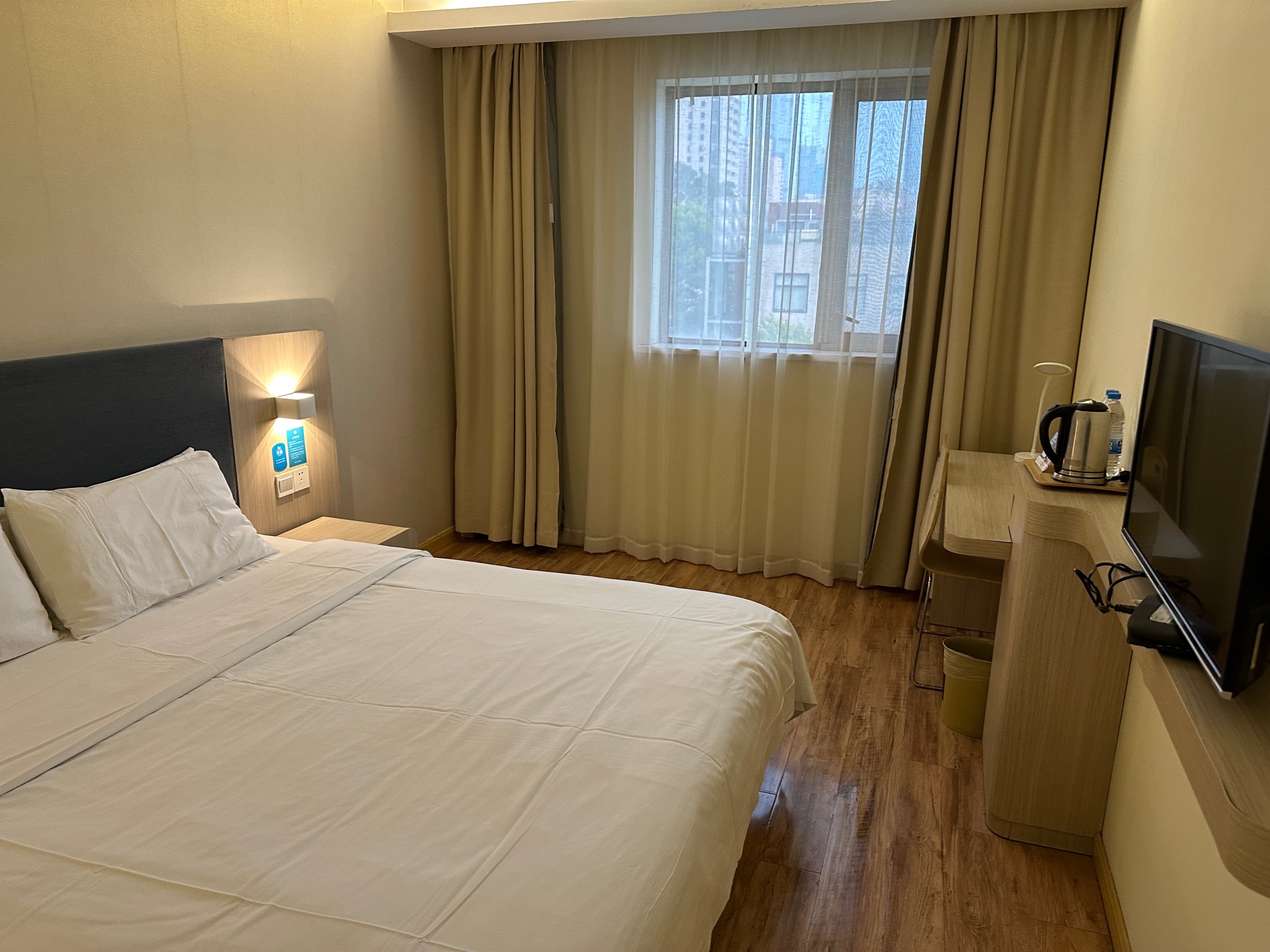
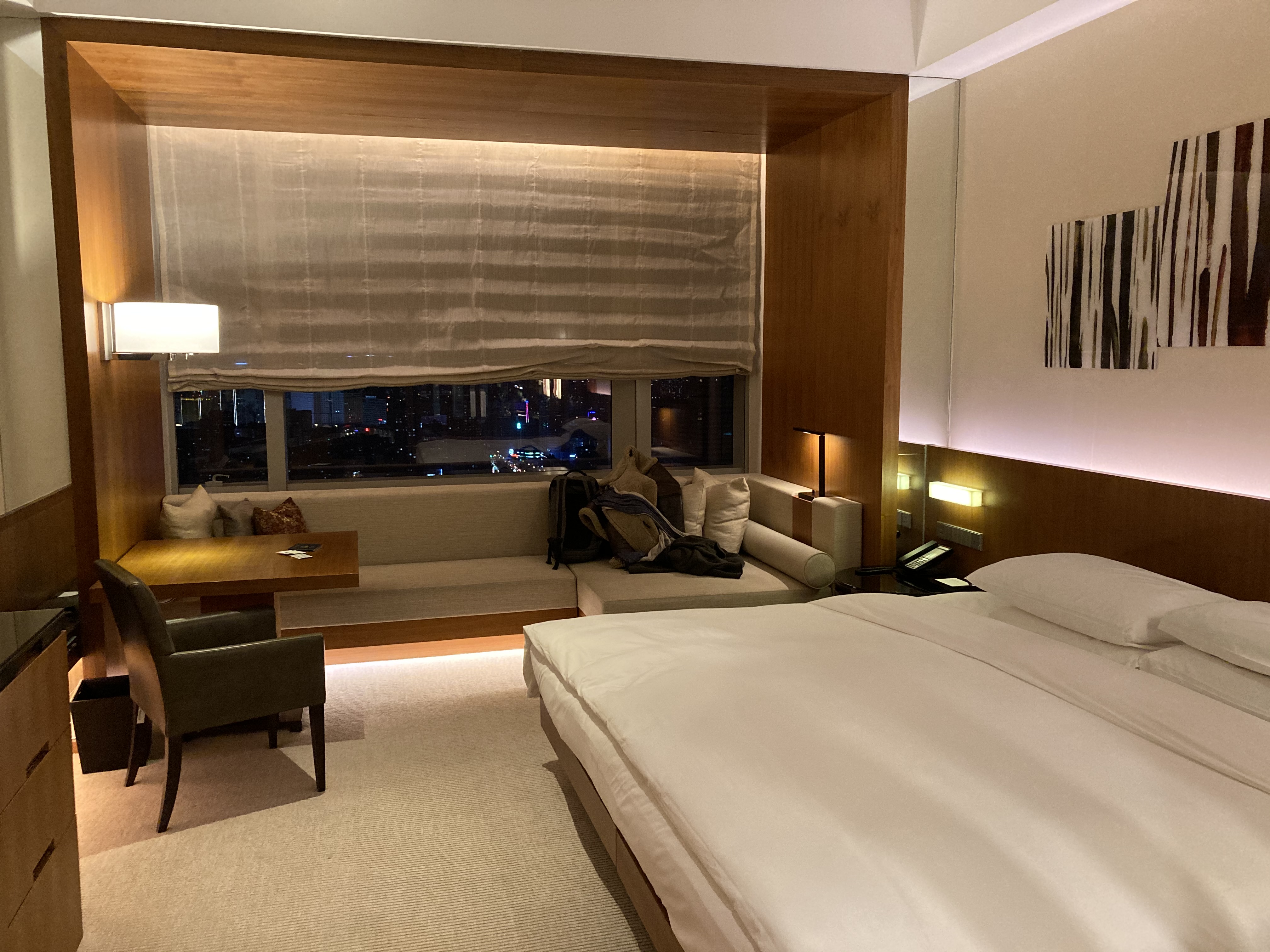
To be sure, classier accommodation was available to local men of means, primarily for liaisons with in-house courtesans and prostitutes, and of course the concessions, particularly in Shanghai and Beijing, had world-class hotels for the foreign elite.
After the atrocities against foreigners in the Boxer Rebellion, the Chinese Government enforced greater safeguards for travelers throughout the realm and accommodation began to improve. The history of travel, hotels, and inns in pre-modern China has yet to be written, though I take a stab at it in my essay Chungking: China’s heart of darkness, where I provide more examples of the challenges confronting foreigners on the road in the nineteenth century.
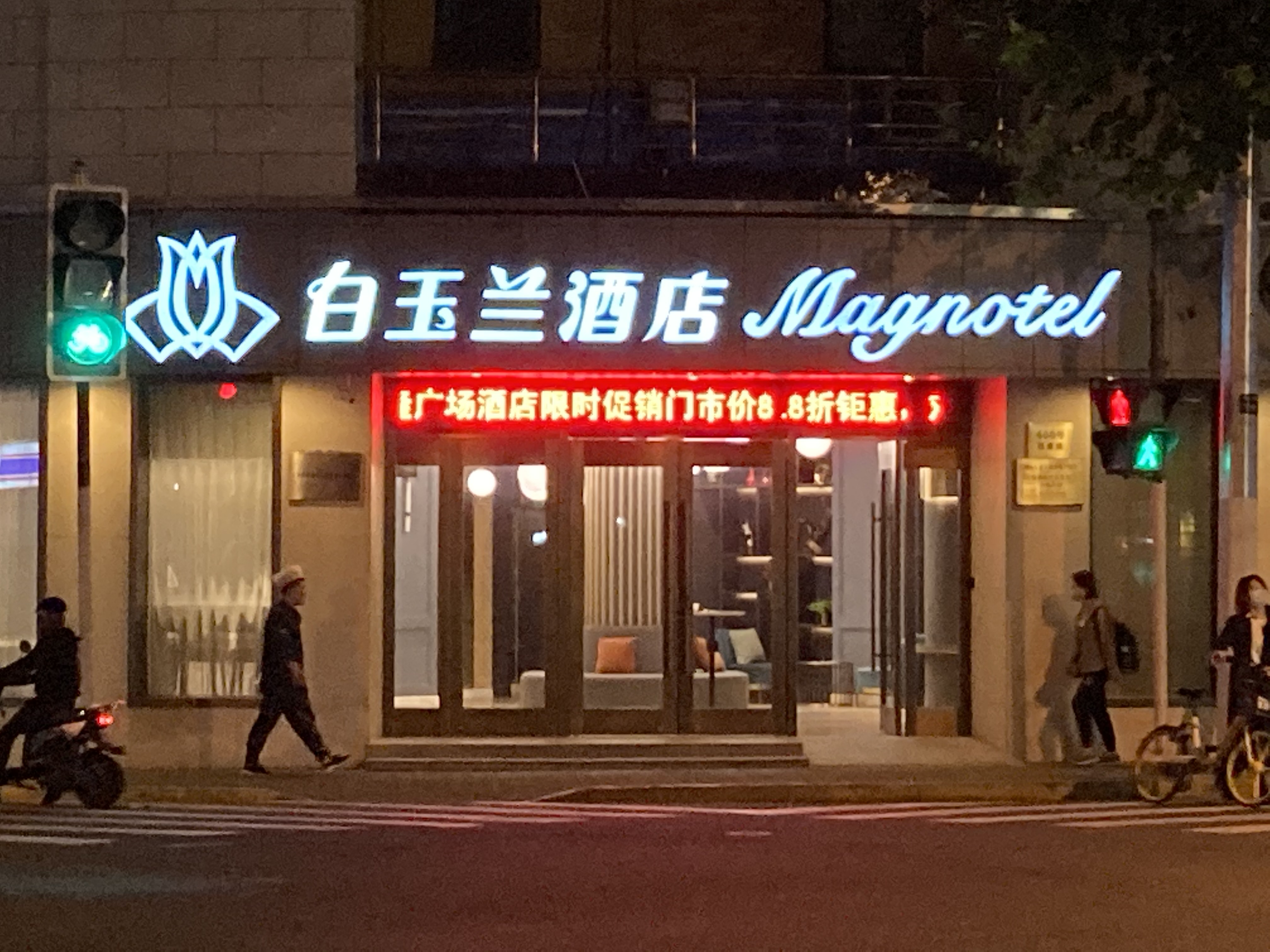
China in our day and age, even back in the 1990s, is an outright utopia to travel and reside in, despite one significant problem that distinguishes the Chinese hotel experience from that of other countries. In most of the world today, hotels do not discriminate against certain categories of guests. In China, by contrast, hotels perform a gatekeeping function which indeed discriminates against certain kinds of guests. This will be illustrated below as I take the reader on a tour of the country’s hotels over the past three decades.
“It’s for your safety”
To return to that initial trip of mine in 1990, after Shanghai, we headed for Nanjing (I was traveling with a Japanese male friend). Motorcycle rickshaws ferried us from our ferry at the Yangtze River pier to the only hotel in the city that accepted foreigners, the Jinling Hotel, at USD $80 per night, rather pricier than we had budgeted for. They gave us the same unwanted royal treatment in our next destination, the Jinjiang Inn in Chengdu. But after investigating the surrounding streets, we found the equivalent of a backpacker hotel, though backpacking wasn’t yet a thing in China. Scraggly foreign backpackers looked to the Chinese like poor people, and they couldn’t understand where the vagabonds came from since foreigners were by definition rich. This hotel agreed to put us up only because we caught them off-guard. Foreign travelers were still so rare that they didn’t know what to do with us. The room had a missing shower curtain and a stopped-up toilet (the maid handed me a plunger), but at only $4 per night we couldn’t complain. Late that night the room across from ours resounded with partying Chinese. They had left their door open, and the morning saw them asleep on the floor amidst scattered beer bottles. Perhaps they had been hoping others would join them, but hotel guests leaving their doors open at all hours of the day and night is a holdover from the dormitory era of previous decades when privacy was a bourgeois luxury. We found a similarly low-end hideaway in Guangzhou, though Canton, as it used to be called, was an exception in having a history of contact with foreigners. This meant they had instant coffee and a Western breakfast on the menu.
Not long after starting my job as a university lecturer in Beijing in 1994, I was invited by a female student and two male friends of hers on a trip to Harbin in northeast Heilongjiang Province. I accepted, eager to explore a new part of the country. We arrived at dawn after 22 hours on the overnight train and breakfasted on beef noodle soup in the restaurant of a hotel that wouldn’t accept me because I was a foreigner. The next five hotels we tried also wouldn’t accept foreigners.
We found at last a state-run hotel that wanted to charge me four times the local rate. The receptionists were sufficiently impressed with my “Foreign Expert” card (provided by the government to foreign teachers) that they allowed us to bargain the price down somewhat. Our female companion, however, was not allowed to room with us and we had to pay for two rooms. (Years later, incidentally, she became the notable talk-show host and CCTV news anchor Tian Wei.) They insisted on holding on to my passport for our entire stay, for the sake of my “safety.” This was unlawful on their part, I later found out, as foreigners were required to carry their passports on them at all times. These safety measures in any case didn’t apply to our rooms, as ours was broken into during the night and 400 yuan lifted from the wallet of one of my companions. Or rather, the break-in was precisely the reason why they needed to hold on to my passport.
Besides “for your safety,” there are two other common phrases foreigners in China soon learn: mei you (“there is not”) and bu xing (“not okay” or “not allowed”). We heard these latter two phrases a lot; sometimes we could get no other responses out of service staff. Upon arriving in our next city, Changchun in Jilin Province, the first few hotels we tried again wouldn’t accept foreigners. The receptionist would disappear into a back office to speak with the boss, who wouldn’t deign to deal with us directly. After an inexplicable ten or fifteen-minute absence, she would return with the expected reply of “bu xing.” No explanation needed.
To my companions’ credit, they then called every hotel they could find in the phone book at a nearby cigarette stand with a public phone. Well, they couldn’t exactly leave me out on the street for the night. Before we gave up in despair, the man running the stand pointed to an unmarked building across the street. It turned out to be an unlicensed hotel, which accepted us without so much as checking our IDs. A tiny foyer served as the lobby. Besides a refrigerator, tacked on the wall was a train timetable and the famous Richard Avedon poster of a naked Nastassja Kinski wrapped in a giant boa. The friendly proprietor put us together in a dormitory room with bunk beds for all of $12, though he had to send the three women occupying it to a smaller room. Clad in tight jeans and attractive, one of them gave me the eye as they squeezed passed us with their towels and toothbrush kits. Itinerant sex workers, I guessed, and this was where they stayed on their nights off. We had better luck the next night in Shenyang in Liaoning Province. A private hotel operator greeted us as soon as we exited the train station and led us to a nearby hotel, no questions asked.
Later that year I toured Xinjiang and Gansu Provinces in China’s northwest with Ming, my then Chinese girlfriend. This was an enlightening experiment in another form of hotel gatekeeping, in China’s Wild West. In Kashgar, near the Kyrgyzstan and Tajikistan borders in Xinjiang’s far west, we took a chance on the People’s Hotel. Here my being a foreigner wasn’t the problem, it was rooming together as an unmarried couple. The bunks in the segregated dormitory were only $1.80 each, with a grimy shower room down the hall and hot water available for only one hour in the evening. A rat fell onto the woman in the bunk above Ming’s. The next day across from an enterprising outdoor patio restaurant for backpackers, John’s Cafe, which had acceptable banana pancakes, we discovered where the foreign travelers assembled, the Seman Hotel. They too were absolutely not going to allow us to room together, only for an illogical dialogue with the receptionist to ensue:
“Are dorm beds available?”
“Yes, but they are for the foreigners.”
“How much for the men’s dorm?”
“We only have one dorm room since it’s the foreigners’ custom for men and women to sleep in the same dorm room. So I’m afraid you’ll have to sleep there together.”
The dorm space was a spacious and sunny corner room looking out on greenery, with twelve thin futons laid out on the blue-carpeted floor. We placed two of them side by side to form a single bed. Male backpackers from North America and Australia comprised the other occupants, and a bloke from the UK bedridden with a case of giardia picked up in Pakistan. Most of the Western backpackers were en route to or arriving from Pakistan via the scenic Karakoram Highway. A few Pakistani merchants kept to themselves in private rooms. The shower stalls were clean and hot water was available all day, though as they were located in the men’s washroom, female guests had to clear us out before locking the door behind them.
In Kuqa, a Uyghur-populated city of 300,000 that looked like a town in the 19th-century American West, near the Kirzir Buddhist grottoes where cannabis grew wild in the streets, we were allowed to occupy a private room. Then in the grape-growing oasis of Turpan, the sole guesthouse had issues with our cohabiting, so Ming tried a new tack and simply asserted that we were married. They asked for evidence. She said she didn’t have it on her. They shrugged their shoulders and gave us the room. In the Hui Muslim city of Linxia in Gansu Province, the receptionist of the third hotel we tried, once we had tracked her down, couldn’t be bothered with paperwork and gave us a room without registering us.
In Xiahe, a miniature Lhasa also in Gansu Province, the Labrang Hotel was clean and attractive though prim, and they put us in separate rooms. Laura, a Chinese American we met on the bus, who was a doctoral student researching traditional Chinese medicine, tagged along and agreed to share Ming’s room. We partied it up in my room with a bottle of domestic brandy I bought from the hotel bar. Laura decided to hit the sack early. Ming stayed in my room. We forgot to bolt the door and in the morning the maids barged in. It may not be the custom universally, but I sleep naked and so do the women I shack up with. At the sight of us, the maids vanished before I made it to the door to lock them out. Later that day we decided to make a united front at reception and demand we be allowed to room together for our final night. They confronted us first, only to ask us—again the bizarre logic—if we didn’t mind rooming together as they were short of rooms and wanted to accommodate a new guest.
What these contradictory hotel experiences illustrate is the transitional period China was going through in the early 1990s when the country’s opening-up was well under way. It was a burst of freedom after decades of puritanical totalitarianism, with laws only on the books and staff turning a blind eye. The same applied to my residence in Beijing.
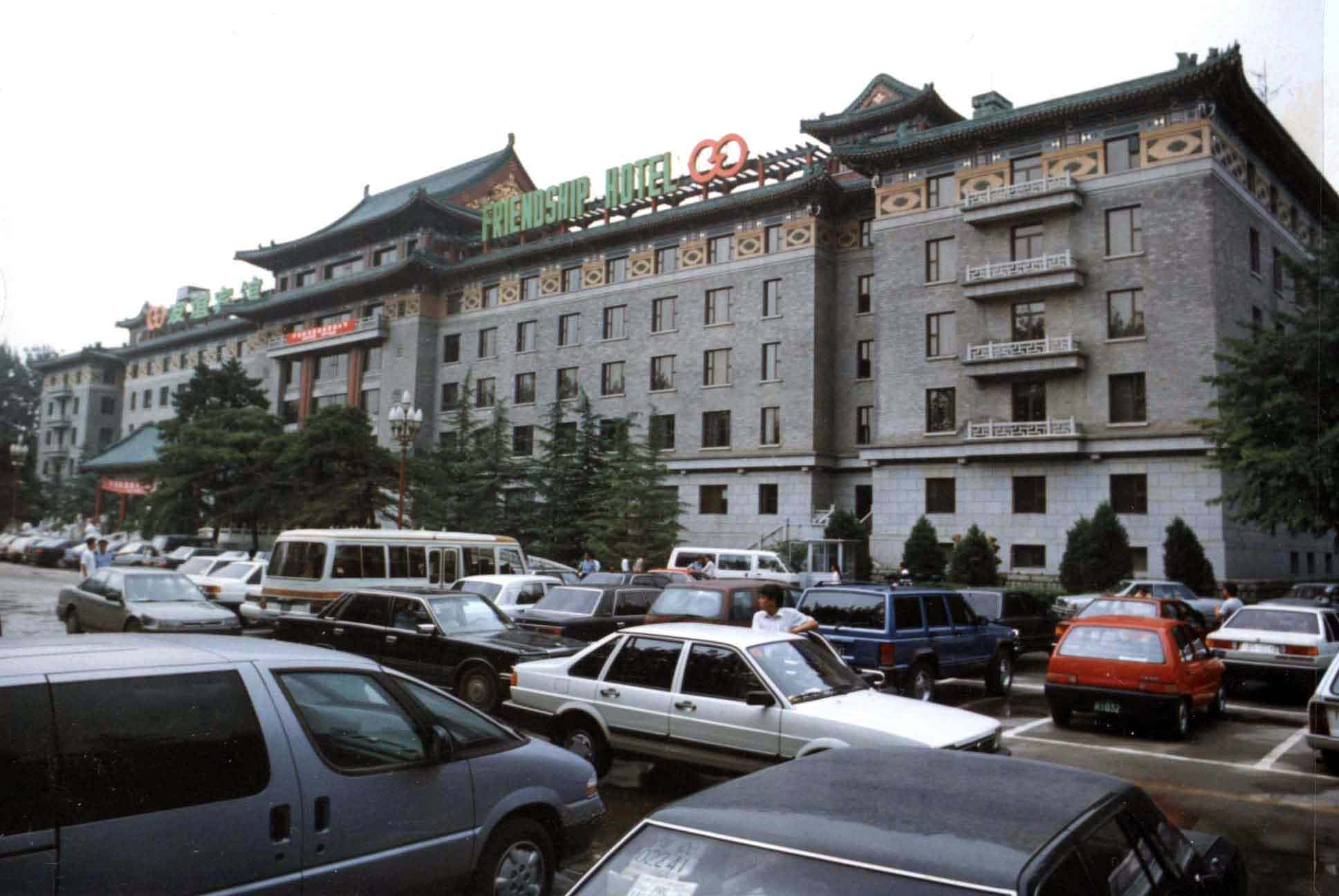
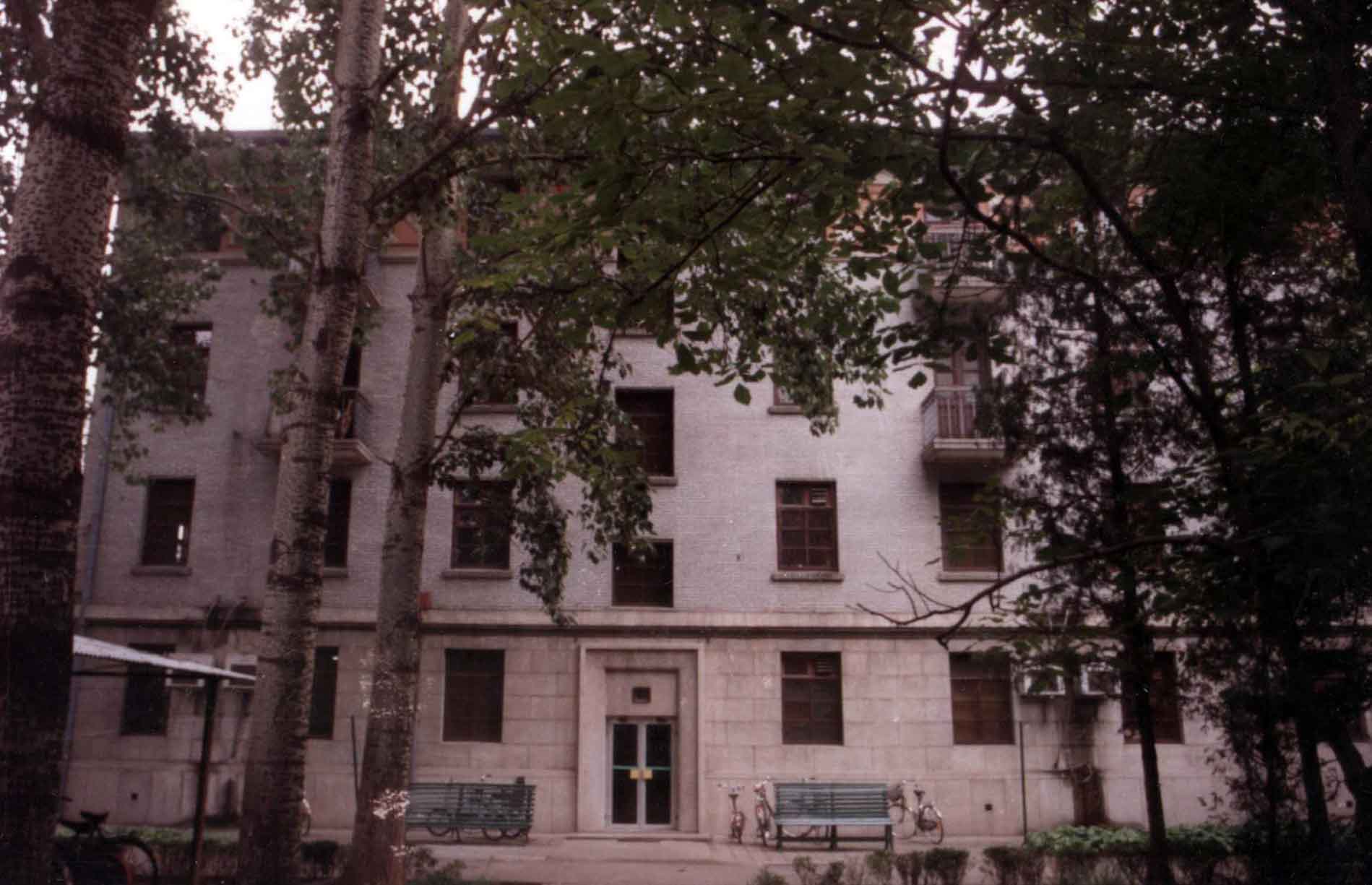
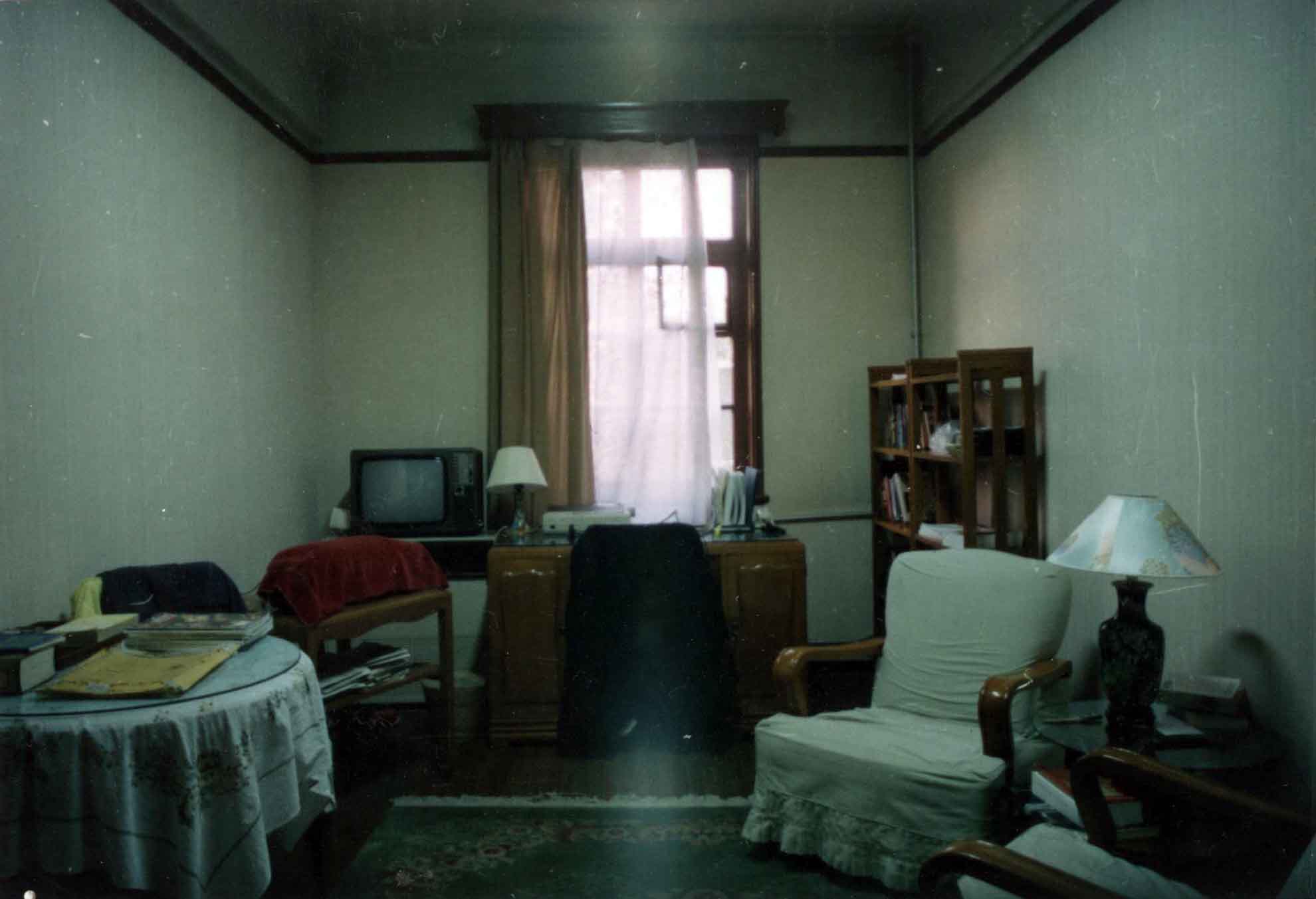
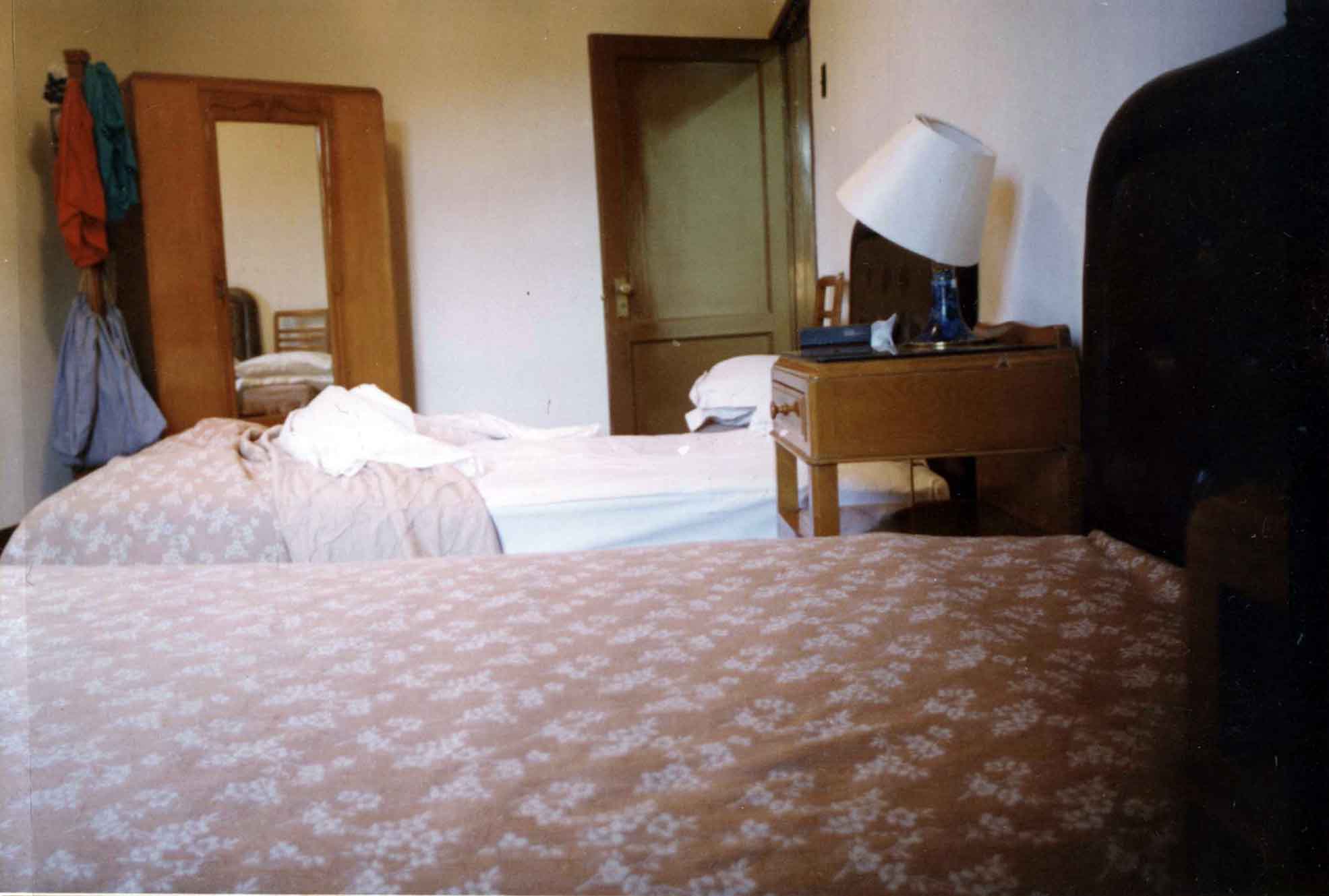
The Friendship Hotel
Foreigners working in Beijing had long lived in the famous Friendship Hotel, where the authorities could keep a friendly eye on them. The sprawling hotel complex, co-built with Soviet help in the 1950s, was featured in the memorable film M. Butterfly (dir. Cronenberg, 1993), based on the true story of a foolish French diplomat (played by Jeremy Irons) who falls in love with what he believes to be a female Chinese opera singer but who is in fact a male dan (female) role performer and Chinese spy who ends up betraying him. The story is set at the outset of the Cultural Revolution (1966–76) when most of the remaining foreigners living in China, apart from a select group of regime-friendly writers and media personalities, were personae non gratae and sent packing.
Foreigners began to trickle back into China in the 1980s. Prior to my arrival, I was told, Chinese visitors to the Friendship Hotel had to register twice, first in a guard post at the outer gate where they were queried on the purpose of their visit and again at our wing’s entrance. My two-year sojourn in the hotel coincided with the next turning point, when visiting rules began to ease and foreigners and Chinese nationals could intermingle in private, though the “rules” involving visitors were in flux and involved perpetual guesswork. Visitors were no longer stopped at the guard post but could proceed directly to our section of the hotel. In the foyer just inside our building was a desk where a maid monitored guests and duly recorded their ID number and contact information in a register. But they often weren’t there and guests breezed right in. I was never wholly sure if the staff was aware or not of the women I had over in the evening. I didn’t push things. As they gave me some slack by pretending not to notice, I observed a certain etiquette in getting any lovers out in the morning before the maids arrived to clean my room.
One day I met a Chinese woman named Shasha who lived on the floor above mine with Ed, an American editor at an English-language Chinese press. They were not married. Only the year before my arrival, she had brazenly decided to move in with him. Cohabitating outside of wedlock was still illegal, but the Chinese are wary of scandals in-volving foreigners and the hotel put up with her for a week or so before summoning the police. It turned out she was something of a virago, already well known to the authorities for her pro-democracy activities; she had been arrested during the Tiananmen Square crackdown and spent several months in jail. Her notoriety worked in her favor, as did her lack of fear when dealing with the authorities. She told me she succeeded in persuading the police to let her go. Not only did they let her go, they ordered the hotel to let her stay put. In other words, the era of relative freedom I encountered at the Friendship Hotel was due to her precedent, at least based on what she confided to me.
This did not mean that anything went. Shasha and Ed were a special case who had in a sense earned their right to cohabit, and that only due to Shasha’s guanxi—her connections with the police and the media. The staff in other cases looked the other way when things were momentary and discreet, and as noted, not a few Chinese females found their way into my nest at night. But sneaking in foreign guests was a different matter, since it was more plainly illegal, and still is, for a foreigner to reside anywhere in the country, even for a single night, without registering with their accommodation.
Thus, when a Japanese female friend visited me for a week-long stay at the Friendship Hotel, I was in a bind. Trying to hide Eri in my apartment wasn’t an option with the maids coming in every day to clean. So I duly registered her with her passport at the hotel’s Foreign Affairs Office, where I was told she had to book a separate room in the main building at regular hotel rates. And since we weren’t married, nor would I be allowed to stay overnight in her room. This was, needless to say, unacceptable to both of us. That evening when we returned to my wing after dinner, several hotel managers were waiting at the entrance for a showdown. I told them Eri was staying with me. They said she was not allowed. I got my workplace supervisor on the phone and he was somehow able to resolve things (we are still good friends to this day). In fact, the hotel couldn’t have cared less about the morality of our cohabiting, it was the breach of protocol that was the problem. When my supervisor agreed to assume responsibility for the arrangement, thereby saving their face, they departed with a sigh of relief.
The next university in Beijing where I found employment, several years later, was less relaxed about protocol. I was forced to reside in the Foreign Experts Guesthouse on campus, where all visi-tors had to sign in and out at the building entrance and a strict 11 PM curfew was in place. As it got close to the hour, they would knock on my door to inform me it was time for my guest to leave. Once when a male friend from the U.S. visited, he was not allowed to stay with me even though my apartment had an extra bed. They put him up in a vacant suite and charged him the going rate of USD $30 per day, claiming with the usual refrain it was for our “safety.” So concerned for our safe-ty that they padlocked the building’s front door every night with a heavy chain. This meant that a hasty evacuation in the event of a fire or earthquake might not have been possible. Nevertheless, one foreign teacher’s apartment on the floor below mine was broken into and his stereo equipment stolen, possibly an inside job.


We have several paradoxes here. Foreigners had star treatment in the best hotels, whereas ordinary Chinese would be stopped at the lobby and questioned as to their business. Yet the strictest curfews applied to foreigners. These curfews were primarily intended to shore up sexual morality—ostensibly anyway; a deeper, age-old fear was spying. Yet most hotels had in-house prostitutes. The madam would receive word from reception of the latest male guests and call their room as soon as they checked in. Other sex workers would go through a routine of calling each room one after the other. You could hear the phone ring in the room adjacent, followed by your room, and the room on your other side. If a woman answered the phone, they hung up. Otherwise, it was, “Are you lonely?” or “How about a massage?” In other hotels, a sex worker followed you into your elevator and struck up a conversation. Or they knocked on your door out of the blue, sometimes a pair of them. Once in a Holiday Inn in Wuhan in 2004, I was having a drink in the hotel lounge and five women appeared out of a side room, surrounded my table and asked me choose one of them. But when budget hotel chains such as Hanting, Jinjiang Inn, Home Inn, and 7-Day Inn popped up around the country later that decade, the authorities cracked down on the more blatant practices and sex workers had to work more discreetly, though they were easily reached by their ubiquitous service cards slipped under guests’ doors.
The bathhouse revolution
By the early 2000s a revolution was gathering steam. The remarkable bathhouse industry bears little relation to the benign camaraderie sentimentalized in the film Shower (dir. Zhang, 1999), which had a moderately successful international run. In the 1980s and earlier in the communist era, bathhouses served as public showers when apartments lacked hot running water. John Blofeld depicted the more lavish trappings of bathhouses in 1930s Peking in his richly detailed City of Lingering Splendour: A Frank Account of Old Peking’s Exotic Pleasures (pub. 1961 (Shambhala, 1989)). This tradition was revived in the 1990s. At first, they were makeshift two-story structures, with separate male and female bath areas on the first floor, the male section including a hot water pool and on the second floor a coed public room (da ting) where both sexes dressed in pajamas could mingle and sleep overnight on lazy-boy recliners while watching Hong Kong Kungfu flicks on the hall’s movie screen. Waiters served tea, beer, and snacks, and girls massaged customers’ feet.
Private rooms with a varying number of beds offered individuals or groups greater privacy for partying, getting a full-body massage with a handjob, and in some establishments, paid intercourse. Significantly, there was no registration process and anyone could occupy the private rooms (though the doors were not always lockable). The bathhouses were the only place unmarried lovers could shack up. They also served as transient hotels for those who for whatever reason didn’t want their whereabouts to be known.
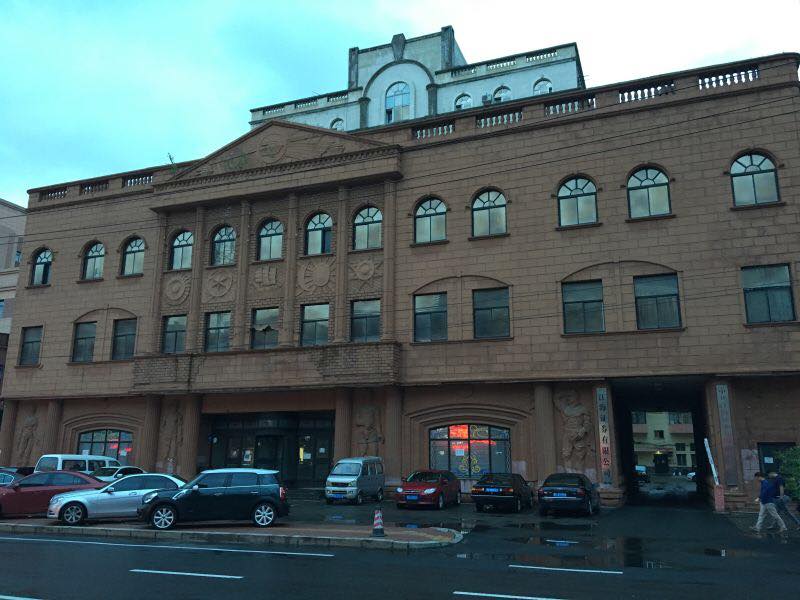

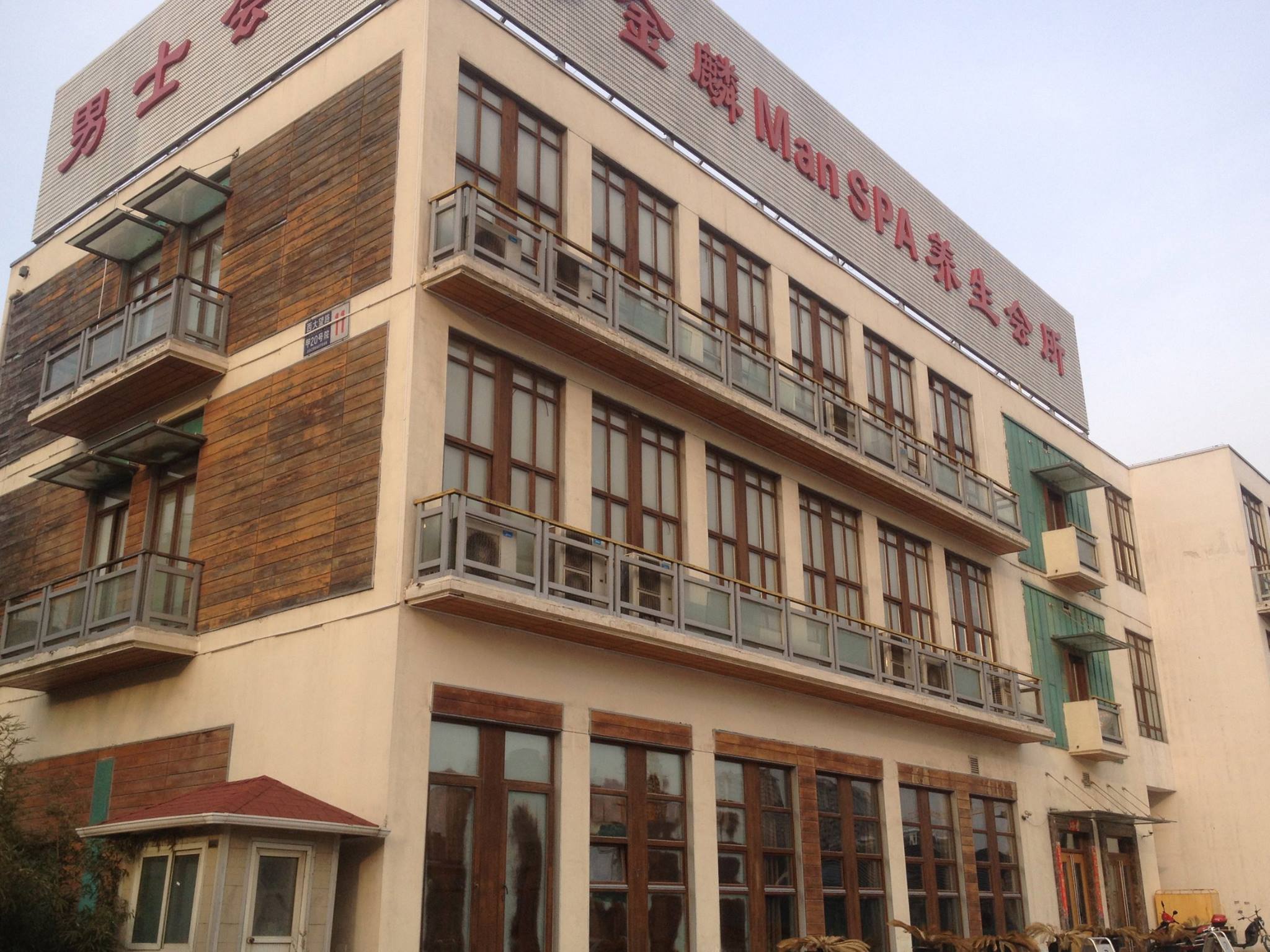
After the turn of the century, bathhouses grew in size and luxuriousness. They were elaborately decorated with Greco-Roman themes and other iconography suggestive of Western decadence. One bathhouse I visited in Harbin in the early 2000s boasted, in the men’s bath section, a gold-plated hot pool and several smaller pools of differing temperatures steeped in a variety of medicinal herbs. In addition to the usual public room, this one with a movie screen worthy of a small cinema, an adjacent auditorium featured dance routines by scantily Russian dancers (Russia is just across the border from Heilongjiang), along with the bawdy northeastern-style vaudeville theater known as errenzhuan.
Buffets grew more sumptuous and compared favorably with those of five-star hotels. Some bathhouses tapped into underground hot springs. The Chinese are often stereotyped as lacking in creative imagination. Not so the bathhouse industry. The West has nothing like it in, except perhaps the great European spas, but the latter are preserving a long tradition rather than inventing themselves out of whole cloth as in China. By the 2010s, bathhouses had evolved into such rarefied exclusiveness that I found myself priced out of them. I cover this era in “The old Chinese bathhouse, circa 2000” (Massage and the Writer).
The government too was evolving. The next milestone was in 2003, when unmarried couples, foreigners as well, were finally allowed to room together in hotels across the country, provided both parties registered at reception with a valid ID. But while some restrictions eased, others would soon be imposed. In exchange for greater sexual freedom, the government wanted to know who was engaging in sex, not to punish anyone but to track everyone. They also clamped down on the freewheeling bathhouses and now required all those using private rooms to register with their ID as in hotels. By the time of the Beijing Olympics in 2008, the registration requirements were fully in place, and anonymity was outlawed.
For a time, as in the old days, you could often get away with booking a hotel room yourself while your lover slipped through the lobby and up into your room without having to register. Then in the 2010s, hotels started using electronic-card keys which needed to be swiped in the elevator to go up to your floor. You now had to go down to the first floor to pick up your bedmate as they waited nervously by the elevator: receptionists were clamping down and stopping unrecognized guests in their tracks. Another reason for the clampdown on laissez-faire lovers was the first application, in 2010, of a 1997 law criminalizing “group licentiousness”—three or more people engaged in sex—after a “Professor Ma” was caught organizing orgies online, among other notorious occurrences in those years (Hunwick).
At the start of the present decade, hotel registration tightened further, sparked by Covid-19 epidemic measures. The clampdown on anonymous guests was complete, as no guests or visitors could sneak past reception—unless they wanted police trouble—without a health code on their cellphone showing they had tested virus-free within the past two or three days, or had not traveled from a Covid hot zone. In the years since Covid, QR codes are dispensed with, but the registration process remains strict and unbending. Hotels now have a national ID scanner outfitted with a webcam for domestic guests on the reception desk. Foreigners have their passports carefully checked (visa as well as latest entry stamp) and photographed. Though their faces are not yet scanned, it’s probably only a matter of time before they will be; they already have their faces and fingerprints scanned at China Customs entry ports. Hotel registration applies to every person rooming together.
As a foreigner who timely registers, you can sleep in peace and need not fear the police barging into your hotel room to catch you in flagrante delicto with someone other than your spouse. Early versions of Lonely Planet China had warned of actual incidents involving foreign men and Chinese females back in the 1990s. This nightmarish scenario was common enough as well for Chinese couples to be featured in the film Sigh (dir. Feng, 2000). But Chinese nationals even now have reason to be cautious. As I discuss elsewhere (Sexual surveillance in the Covid-19 era), while unmarried couples are free to room together, the government now has the means to ascertain who is committing adultery in hotels and guesthouses, information that may be of potential interest to certain parties.
A very special excursion
In November of 2022, while I was living in the southern Chinese city of Ningbo and travel-starved, my university hastily arranged a group excursion for us to the city of Ninghai 70 kilometers to the south. A community representative informed us to be packed and ready to leave and wait for a phone call that evening. I didn’t get the call till 2:30 AM. I was then told to wait for another call, which didn’t come until noon the next day: our bus was waiting at the gate. It soon filled up with colleagues living in my complex. The drive down to Ninghai was quite nice and what we could see of the city was green and attractive. The hotel was in an old building but the room was sufficient for the purposes of our planned week-long stay. Our tour of the city, however, was confined to what could be viewed out the hotel window. Except to retrieve our three daily meals and have our temperature checked twice a day at 6 AM and again at 6 PM by workers in white hazmat suits, we were not allowed out of our rooms. As I’m in the habit of daily walking, I created an obstacle course of thirty paces around the room; 200 laps twice a day more or less satisfied my exercise addiction.
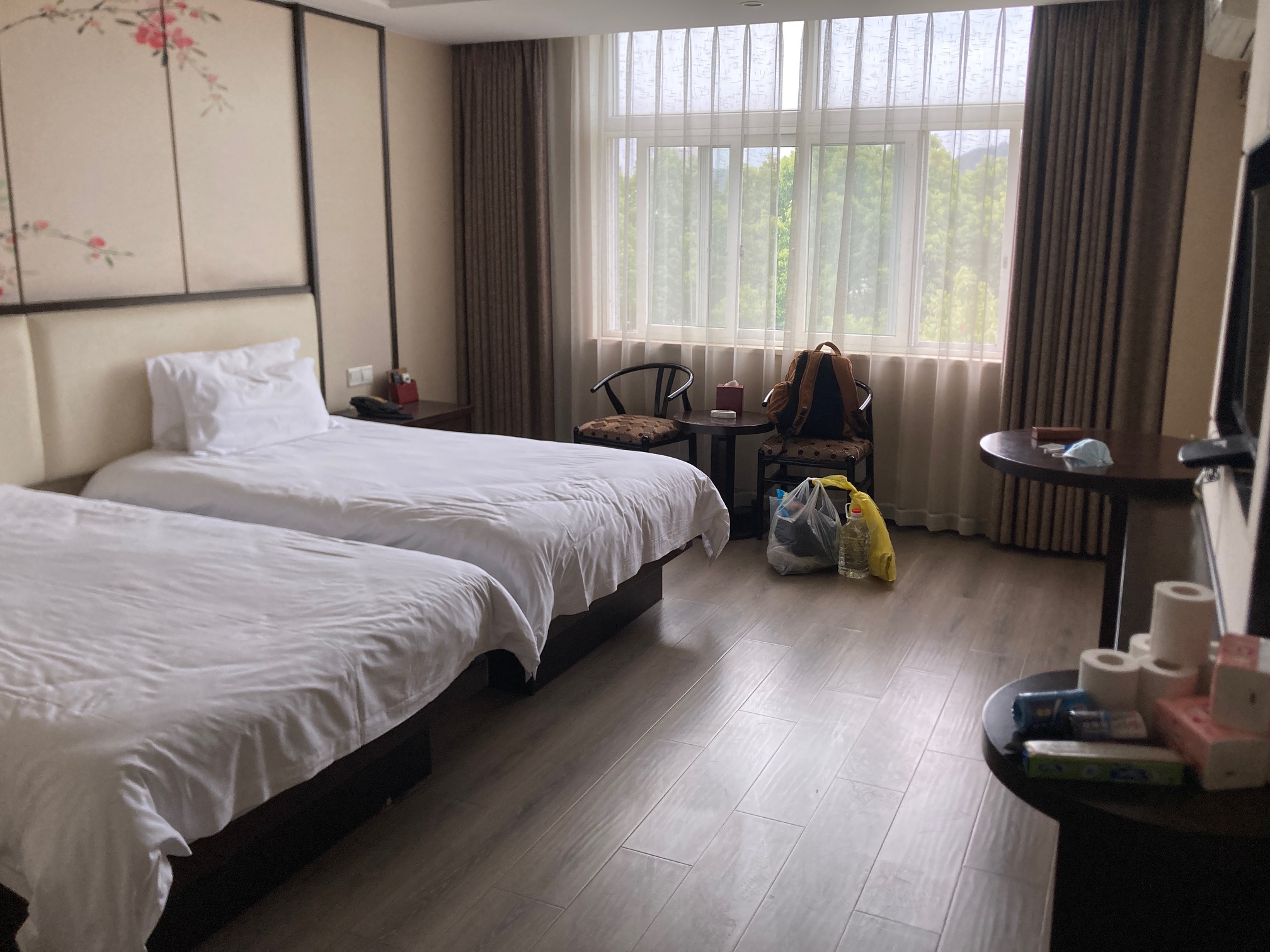
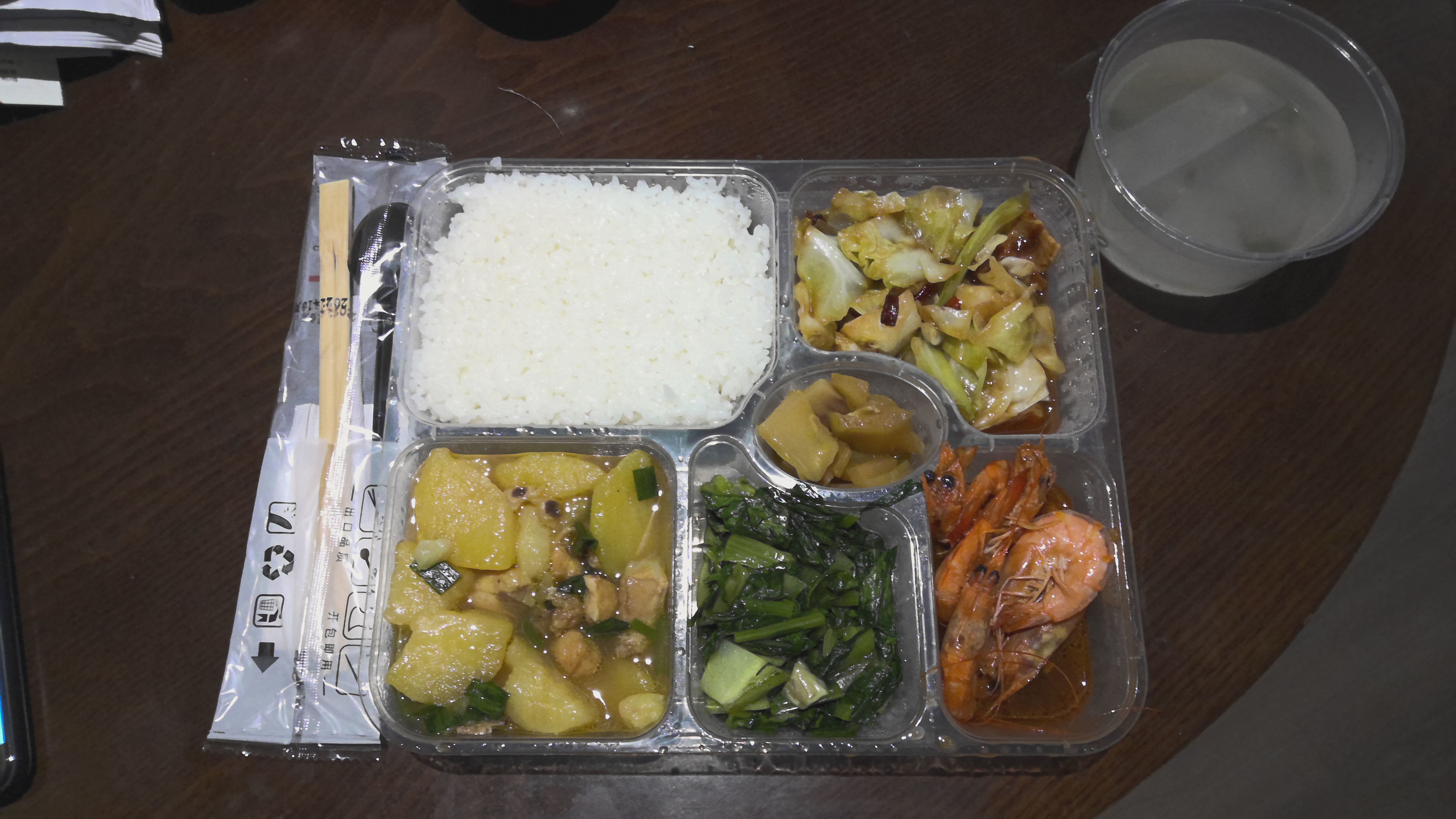
Our little involuntary outing was carried out, as you might have guessed, as part of “epidemic prevention measures.” What triggered it was two students on campus who tested positive for Covid. The campus was immediately locked down and everyone connected to the university in any capacity—some 10,000 students, faculty and staff—was ordered onto buses and shipped to available hotels in Ningbo and surrounding cities. Married couples were inexplicably forced into separate rooms (any children were split up between them). Then just as arbitrarily, after three days they decided the massive relocation was unnecessary and allowed us to go back home for three more days of self-quarantine, an electronic sensor affixed to our doors.
I’m glad I went through this instructive and enlightening experience, at least historically speaking, having a taste of what many millions of others around the country had to undergo more protractedly in the months-long lockdowns in Wuhan, Shanghai, and other cities. Covid has now passed and the draconian control measures have gone dormant. After several years of confusion over the direction of the domestic tourist industry, the government, as of 2026, has begun easing the visa process, and cashless payment apps are now more user-friendly for foreign tourists. I expect the industry will rebound and eventually surpass pre-Covid levels, given the steady improvements in the quality of hotels, guesthouses, and B&Bs.
As of 2024, the age-old hateful practice of barring foreigners at certain hotels is officially being phased out. Travelers who are refused lodging can call a national telephone hotline (12345 or 12367) to force the hotel to accept them (People’s Republic of China, Ministry of Commerce). A 2026 English-language update reminds foreign travelers (who manage to hear of it) that they must still register at all accommodations, even when staying with a Chinese or foreign friend, and this can now be done online (People’s Republic of China, State Council). The reality is a bit more complicated. The directives seem to be geared more toward educating local authorities, including the police, who may not even be aware of them, than toward foreign travelers, who are at the mercy of locals’ cooperation. Many smaller establishments may never have processed a foreigner before and don’t know how to go about it. You can help avoid the pitfall of a refusal upon arrival by booking online with any international travel app, which automatically filters out non-foreigner accommodation in China.
* * *
Other posts in this series:
Insights into China, Part 1: A walk down the street
Insights into China, Part 2: A meal in a restaurant
Insights into China, Part 3: An invitation to a party
Insights into China, Part 5: A glimpse inside a school
Insights into China, Part 6: A visit to the library
Insights into China, Part 7: An immersion in a museum
Insights into China, Part 8: An afternoon in a café
Insights into China, Part 9: A journey to the hinterland
Insights into China, Part 10: A vision in a concert hall
Insights into China, Part 11: A timeslip to the glorious Qing
Insights into China, Part 12: An idyll in paradise
BUY THE BOOK. FORTHCOMING THIS FALL:
At the Police Café: China in Twelve Scenes



Leave a Reply