THE 1990S ART SCENE
When I first arrived in Beijing in the mid-1990s, there weren’t many art museums. Apart from the Forbidden City’s Palace Museum, the only other major one was the National Art Museum of China. Not that these two museums lacked boasting power. The Palace Museum is the world’s largest by size (720,000 square meters) and annual visitors (17 million), though due to differing definitions, the Louvre in Paris is usually ranked the largest purpose-built museum on both counts (240,000 sqm; 8.7 million visitors). While the National Art Museum is a decent-sized museum by any standards (30,000 sqm; 1 million visitors), it was soon dwarfed by the gargantuan National Museum of China (200,000 sqm; 7 million visitors), which opened in Tiannanmen Square in 2003. And in 2006 the architecturally stunning Capital Museum opened in Beijing’s Muxidi district (64,000 sqm; 2.25 million visitors) (all data drawn from the web).
The rise of these new museums reflects a seven-fold increase in museum growth across China from 1,013 museums in 1990 to 7,046 in 2024. It’s hard to keep up with all the massive structures appearing out of nowhere, such as the China Art Museum in Shanghai (opened 2012; 64,000 sqm; 1.5 million visitors), the Hunan Museum in Changsha, Hunan Province (opened 2017; 91,000 sqm; 4.4 million visitors), or the Yichang Museum in Yichang, Hubei Province (opened 2019; 43,000 sqm; 820,000 visitors), to name just a few. The booming museum culture is paralleled by a proliferation of architecturally imposing libraries, bookstores, opera houses, train stations, airports, and shopping malls around the country, many designed by world-renowned architects. Shopping malls? Check out Beijing’s breathtaking Parkview Green and its art installations. Bookstores? See “Inside China’s New Wave of Conceptually Innovative Bookstores.” Anyone still claiming modern China has a culture deficit may want to recalibrate their knowledge of the country.
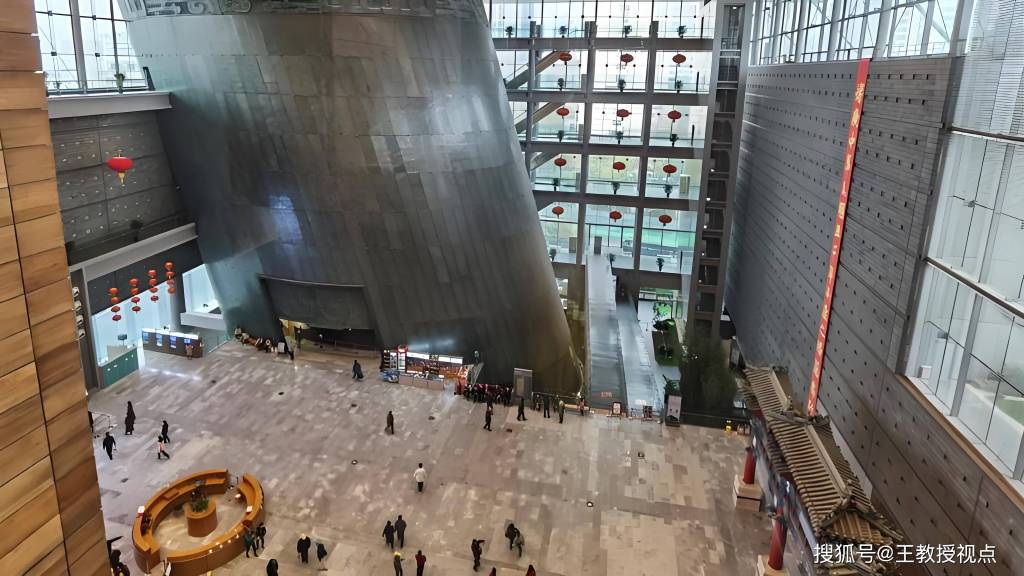
Beijing’s National Art Museum garnered international attention when on February 5, 1989, the artist Xiao Lu fired gunshots at her Dialogue installation, resulting in the immediate closure of the show and her arrest. My frequent visits to the museum in the nineties were less eventful but indelible impressions remain. Museum cafés always interest me because their design is often (or ought to be) a microcosm of the museum itself, or they are at least elegant and scenic. I don’t recall a café in the National Art Museum, nor were there any cafés in the whole city in those years for that matter, apart from a handful of five-star hotel lobbies serving Nescafé to foreign guests. Museum gift shops interest me for the same reason, and the museum did have a gift shop. I couldn’t help but smile when several Japanese tourists snickered at the poor quality of the reproductions in the art books for sale, on cheap paper with poor resolution and washed-out colors, a problem all domestically published art books suffered from in those years (today they are of much better quality).
In the post-Tiananmen Square era, the museum’s galleries displayed mostly traditional-style landscape and calligraphy paintings by old masters and Party-approved contemporaries. I found this art engrossing since I was learning about it for the first time. But as sanctioned creativity crept back in, the museum began a serious effort to hold exhibitions of foreign art. One such exhibition was of drawings by Salvador Dali. To provide context, the exhibit also included reproductions of his famous paintings, one of which was The Great Masturbator (1929), with its weirdly deformed head balanced on its nose and a woman’s bust emerging out of it who is sniffing a male statue’s privates. What struck me was not so much the unlikely painting’s appearance in a Chinese museum as one female visitor who was standing before it, staring at the painting expressionlessly yet patiently and intently in her effort to understand it.
Time and again Chinese of all stripes have told me that they don’t “understand” modern art (or jazz). In the West, we tend to either love or hate certain art, never that we don’t understand it. This neutral reaction is more commendable than outright philistinism, but I’ve always found it rather odd. Perhaps it stems from an unconscious but insidious influence of socialist realism. As I’ve always tried to explain to them, you don’t have to “understand” art but merely feel it. React to it and examine your reaction; that will tell you how to understand it. Modern art is not always meant to be “beautiful.” It is meant to provoke, and if it succeeds in provoking, that is where the beauty lies.
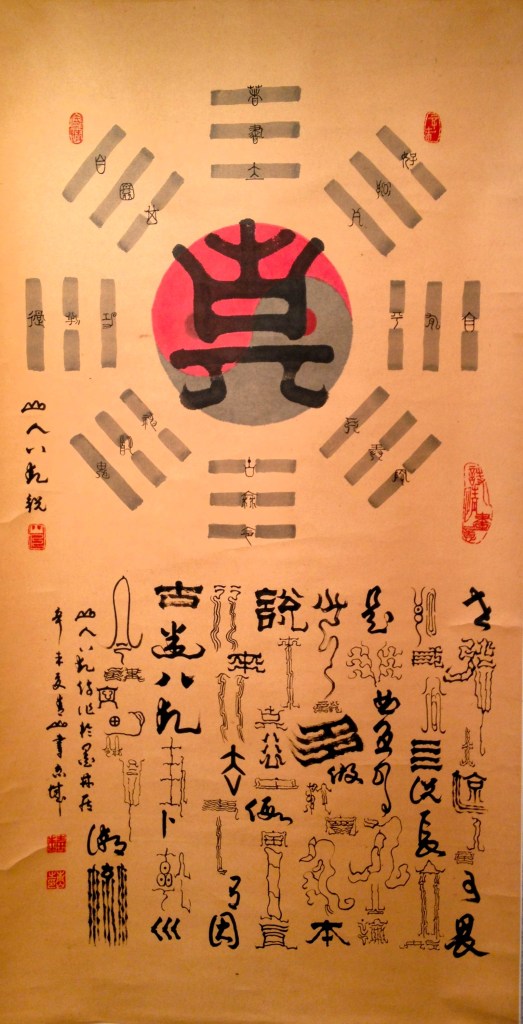
One day I was browsing in an art shop in the Peking University area when I saw an intriguing painting for sale. The calligraphy was so unusual that I bought the painting and inquired about the creator. The clerk put me in touch with the artist, Pan Qing, a Beijing local who lived nearby in a traditional one-story courtyard home which would soon be demolished in the redevelopment drive that was going on throughout the city in those years. Pan Qing subsequently donated more of his paintings to me in the hope I could market them in the U.S. This was all before the Internet and email and we later lost contact. But the encounter sparked my collection of Chinese paintings by artists I met in person—a safer bet than being swindled into buying bogus antique paintings in the city’s many art markets; the Chinese have long been the world’s premier forgers.
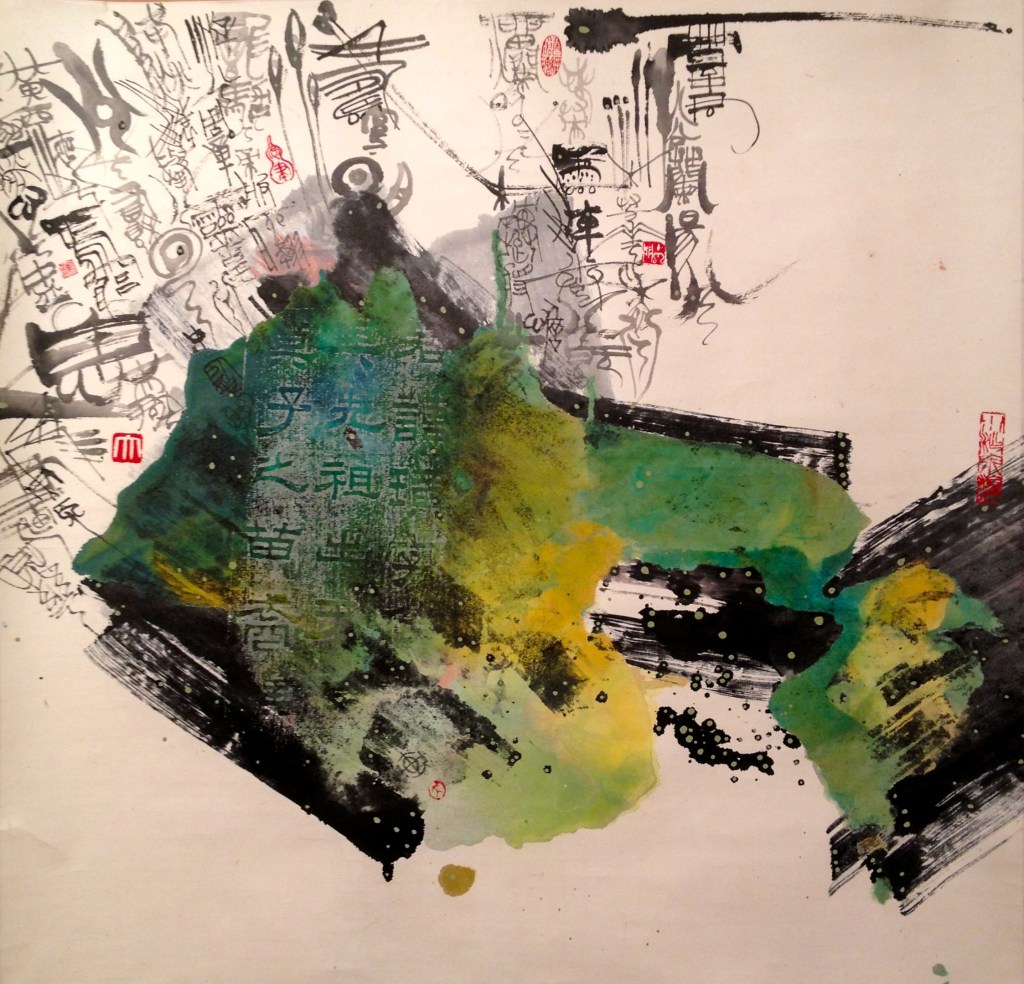
Another artist I met was the husband of a teacher at my university. Xiao Dayuan’s art had attained some professional success, enough to earn a temporary exhibit at the National Art Museum. He employed Chinese inks and printing methods on traditional silk scrolls but with a lithe, experimental freedom informed by western abstract art. Like Pan Qing, he also devised startling, unconventional calligraphy, as in the accompanying painting. I bought as many of his paintings as I could afford. I was also invited to his home. On the wall of their bedroom was a painting of a nude. He related how their neighbor caught sight of it one day and called the police. The complaint was dismissed and the cop gave the puritanical neighbor a stern lecture about respecting the arts. I shared Xiao Dayuan’s interest in erotic themes, and he agreed to part with a prized painting of his featuring a partly abstract, partly realistic rendering of a woman’s spread legs and finely touched pubic hair, scandalous enough to proudly hang on my own wall at home. We also lost contact.
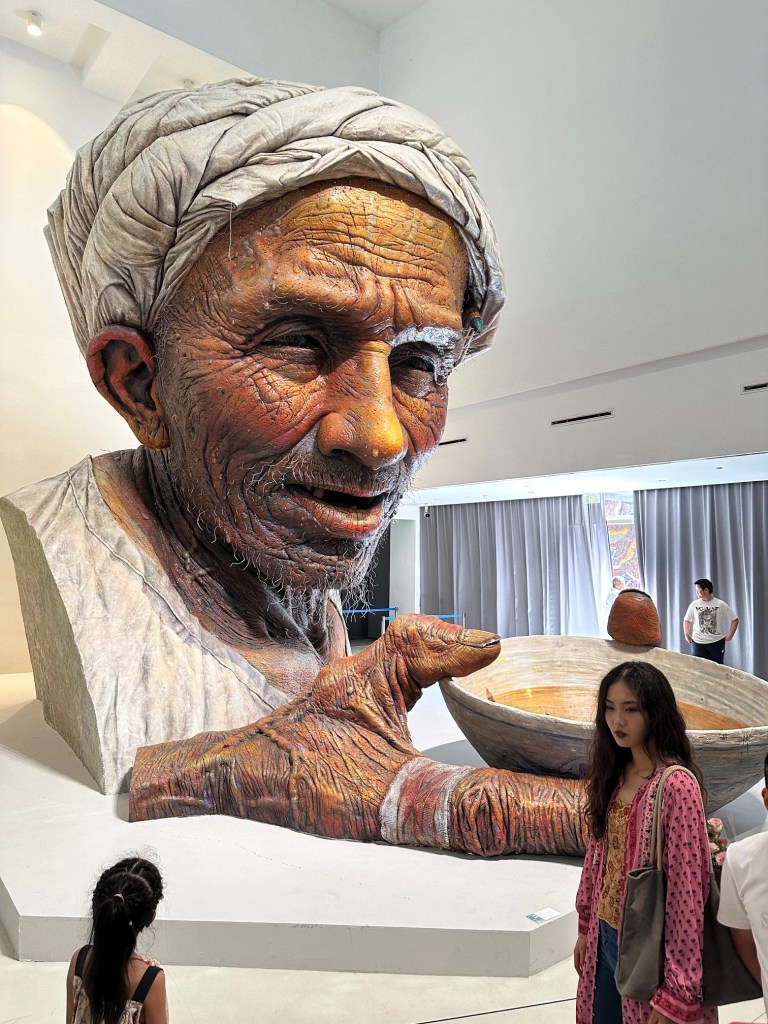
I mention these two artists to underscore that not all painters confined themselves to the safe and timeworn themes of mountains, bamboo, carp, and plum blossoms. Challenging art of all types had always been around, just not permitted on museum walls. Also in that decade, a well-connected woman in the art world invited me to a thriving artist colony in a semi-rural community between the Summer Palace and the Old Summer Palace. I was introduced to several artists. In one spacious studio, large canvasses depicted bald-headed Chinese men with big grinning mouths. Years later the same paintings cropped up in the international media as belonging to a rebellious “Cynical Realism” school. Actually, two artists produced such paintings, Fang Lijun (b. 1963) and Yue Minjun (b. 1962), so similar in their style it’s easy to confuse them. One certainly influenced the other. Possibly I met both of them. Regardless of who it was, I recall being amused by one artist I talked to there who scowled at my mere mention of traditional Chinese art, dismissing it all with a sweep of his hand as rubbish. The colony was soon razed and the artists pushed out. They migrated to the city’s east, some to an abandoned factory district that would become known as the 798 Art Zone, others to the suburb of Songzhuang.
Launched at the turn of the century, the 798 Art Zone was the answer to the city’s lack of official interest in contemporary Chinese art. It soon attracted hundreds of resident artists, who opened their workshops and studios to the public and displayed their art in a seemingly infinite array of galleries in the airy Bauhaus-style factory buildings, designed by East German architects in the 1950s. I first visited 798 in 2003. At its height in 2007, it was so vast and sprawling it felt like a cocky, upstart Palace Museum for the avant-garde, comparable in extent to the Forbidden City. Much of the art was sexually provocative, as illustrated in this collection of photos I made with an antique Treo smartphone: Tour of Beijing’s 798 Art Zone, 2007. The 2008 global financial crash considerably shrunk the scope of the place and with it the swagger and carnivalesque atmosphere. 798 has survived up through the present, but the emphasis has shifted from galleries to cafés, restaurants, and giftshops. Though there are still plenty of exhibits, the art is more polite and expensive than of yore.
STILTED HISTORICAL NARRATIVES
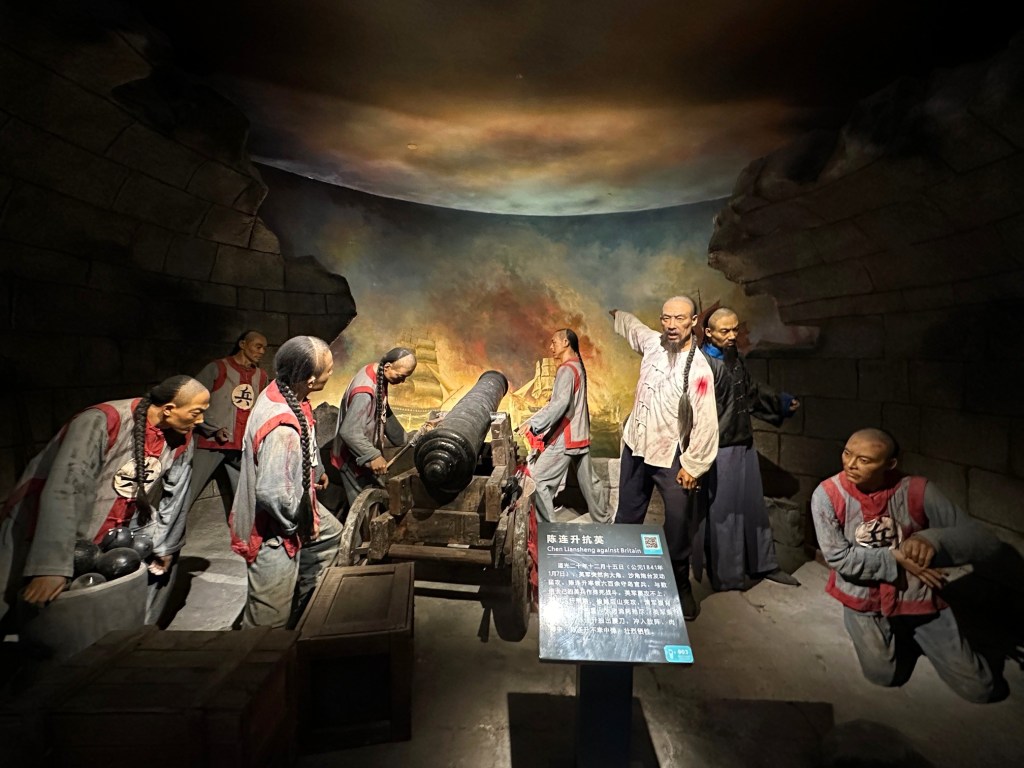
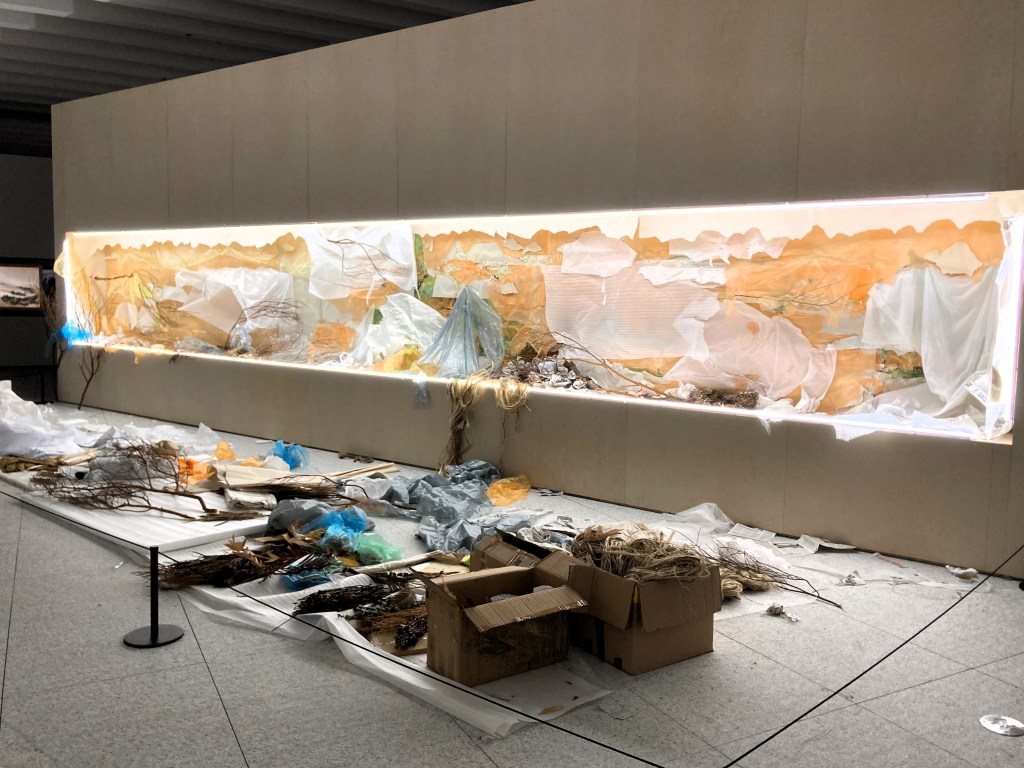
History museums in China don’t like to display anything that could put the country in a bad light. The exception is heroic displays, even in defeat, against historical adversaries. An example is the diorama featured at the top of this post, showing commander Chen Liansheng rallying his troops against the British assault on Canton (Guangzhou) in the First Opium War. The Chinese were quickly routed but fought valiantly, if hopelessly, against an enemy with firepower about 200 years more technically advanced than theirs. The only reason this battle is mentioned in this distant museum in Enshi City in Hubei Province, 1,200 kilometers north of Guangzhou, is that Enshi is the seat of the Tujia and Miao Autonomous Prefecture, and Chen Liansheng was an ethnic Tujia (more on which below).
The Opium War is a tricky subject for Chinese school history textbooks—and for history museums. History museums are, after all, primarily educational in function. The First Opium War (1839-42) and the Communist victory in 1949 form the bookends of the officially designated “century of humiliation.” Because the Communists triumphed, it’s acceptable to recount heinous events leading up to this triumph, as long as atrocities by evil foreign powers (the British, the Japanese) are spotlighted and internal enemies—anything that casts doubt on the native nobleness of the Chinese people, e.g., the Taiping Rebellion—glossed over or ignored. The Taiping Kingdom History Museum in Nanjing, for example, is a puny, paltry excuse for a museum, reflecting the government’s ambivalent stance on the populist Taiping. A museum properly devoted to the bloodiest civil war in world history deserves to be in Tiananmen Square. (The Nanjing Museum of the Site of the Lijixiang Comfort Stations does a better job, housed in the same building in which the Japanese army imprisoned their Chinese sex slaves.)
Total casualties from China’s numerous nineteenth-century internal rebellions far surpass the many millions massacred by the Japanese in World War Two, but these comparisons are seldom made. The PRC Government’s political ambivalence extends to the Qing Dynasty (1644-1912) itself: inherently evil and not even native (the Qing were Manchus, not Han), yet it constituted China’s very identity for almost three centuries. Since, however, anything falling within the “century of humiliation” is necessarily humiliating, it cannot be lingered on except to make a few teachable points.
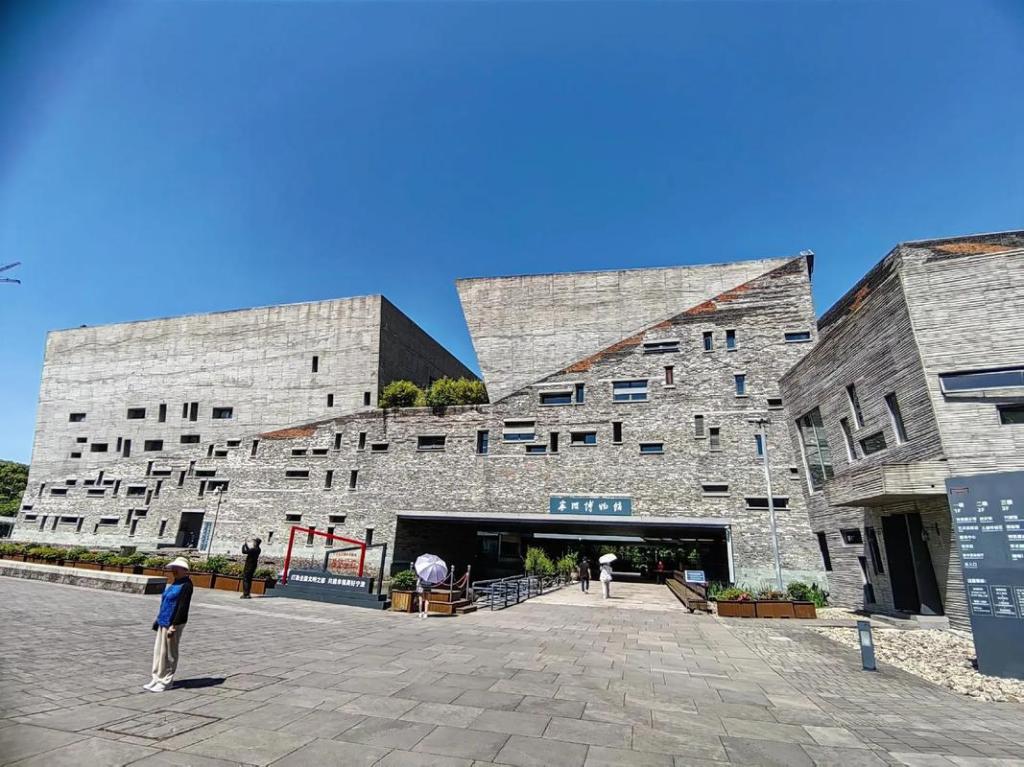
As another example, let’s take the Ningbo Historic Museum in Ningbo, Zhejiang Province. Built in 2008, it’s architecturally impressive. The building’s irregular outer walls are made from old tiles and stones from demolished buildings, lending it at once an antiquated and modern look. But as with many city and provincial museums in China, vast amounts of floor space are devoted to largely irrelevant displays, while many key historical events are given scant space or simply elided. To return to the Opium War, from October 13, 1841 to August 29, 1842 Ningbo was occupied by the British army. You’d think being under foreign military occupation for close to a year would be deemed a significant, if not a pleasant event in the city’s history. The museum has nothing to say about it. This is perhaps due to the March 10 incident that year when British troops mowed down, at close range with howitzers, hundreds of Qing troops who attempted to retake the city. Hard to create a heroic diorama about that. The museum also has nothing to say about the Taiping rebels’ violent conquest and loss of the city between December 1861 and May of 1862, nor anything about the Japanese biological warfare attack with a bubonic-plague-infested bomb dropped from a plane in October of 1940; quick containment measures kept the death toll to 111. The city built a memorial at the sight of the bombing, but it’s not in the museum.
Meanwhile, museum visitors must work their way through an endless succession of glass-case displays of artifacts covering every trace of life in the Ningbo region from the Neolithic Era forward—in a museum devoted to the history of a city. The Shanghai History Museum suffers from the same lopsidedness, with far too much space devoted to Neolithic and later artifacts that more properly belong in a museum of natural history or anthropology, and the most significant events in the city’s history only mentioned as an afterthought. Let’s have closer look at this.
The history of Shanghai proper begins in the Ming Dynasty in 1553 when the city wall was built to defend against Japanese pirates. But by far the most interesting period in the city’s history coincides precisely with the century of humiliation, when foreign powers—the British and later the French, Americans, and Japanese—took over and ran the city after the First Opium War until the Communist victory in 1949. Before the Opium War, Shanghai was an average Chinese city, similar to Ningbo. Both were port cities separated by only 82 nautical miles across the Hangzhou Bay, and both had oval-shaped city walls, with about 100,000 or twenty percent of the greater Shanghai population living within its city walls, and 75,000 or three percent of the Ningbo Prefecture population living within its city walls. Ningbo’s surrounding population was thus much larger than Shanghai’s, but Shanghai’s location at the mouth of the Yangtze River lent it much greater potential to develop. When the foreign powers took over, they left the walled city to the Chinese and simply built around it.
The foreign concessions came into their own by the turn of the twentieth century. By the 1930s Shanghai was not only the nation’s most modern city but one of the most glamorous cities in the world, rightly dubbed the Paris of the East. But because all this transpired during the century of humiliation, and the city’s vibrant success the doings of foreign devils, a museum devoted to the city’s history even today skips over that whole century’s progress—down the memory hole. The irony is that the museum occupies the grandstand building previously overlooking the old racecourse (now People’s Park) whose spectators comprised the Shanghai foreign elite.
One might counter that foreign-occupied Shanghai was not really China and therefore the museum need pay little heed to what was then alien territory. Most Chinese, however, would beg to differ. They swamped the foreign concessions in droves right from the get-go and never looked back (for more on this history see my Out of the squalor and into the light: When the Shanghai wall came down). Shanghainese today are proud of their city and would be insulted at the suggestion there was or is anything alien about their territory. I’m sure many in the Shanghai municipal government too would happily refurbish the museum with a grand display of the glory days of the 1920-30s but are prevented from doing so by the propaganda apparatchiks.
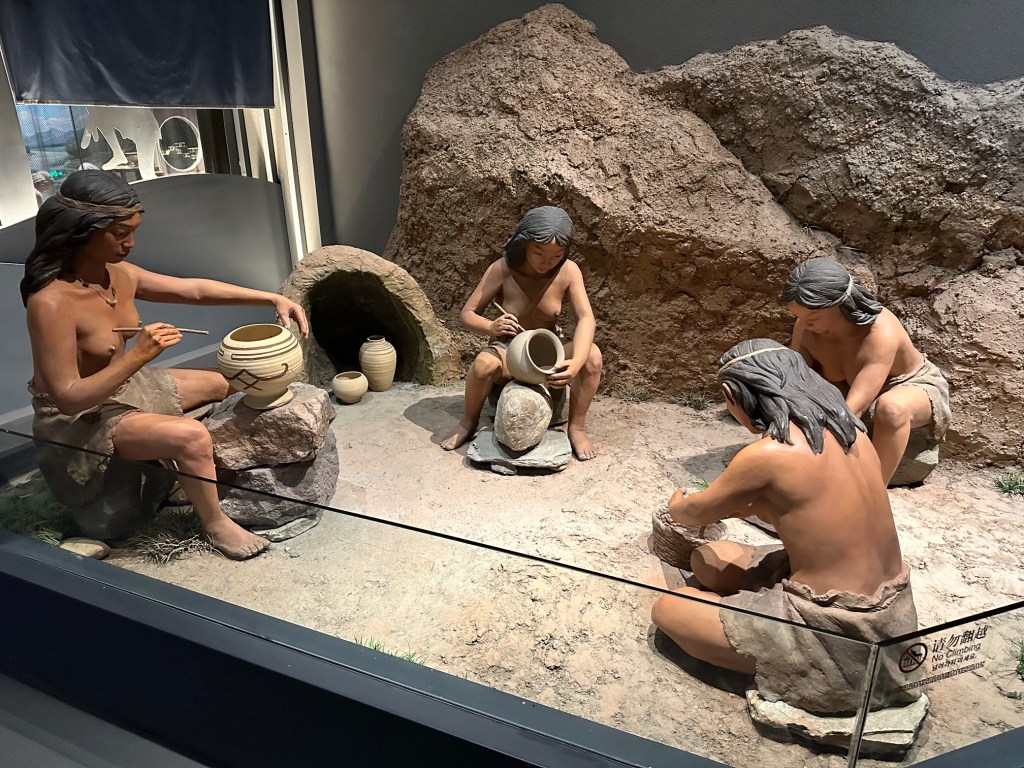
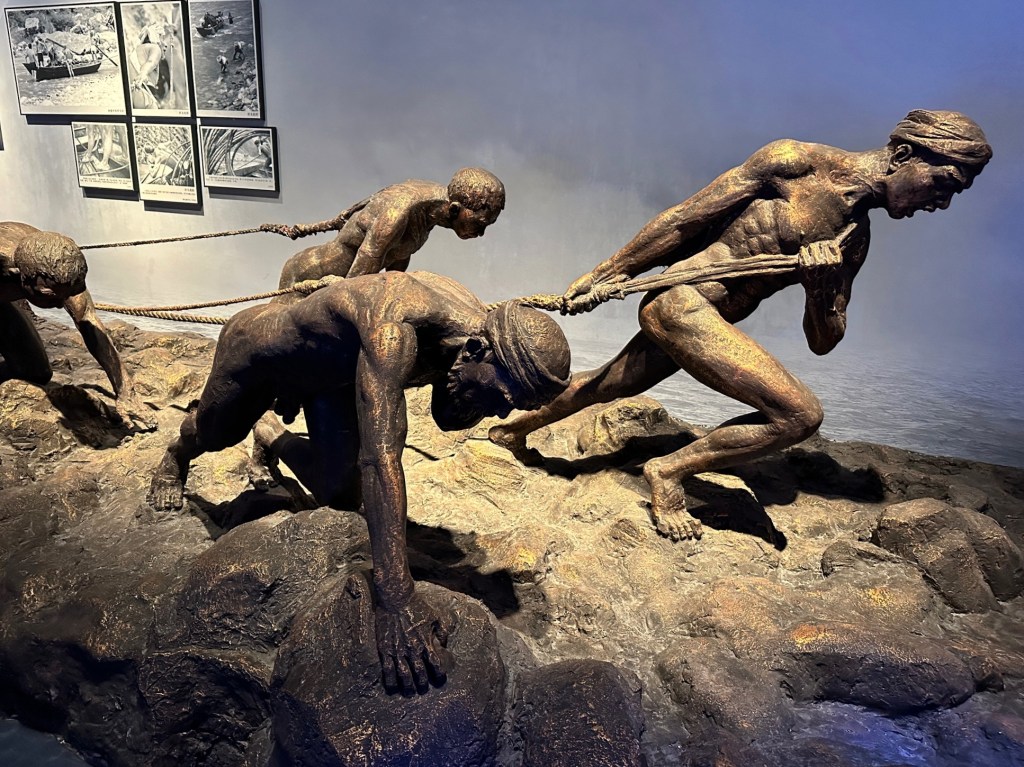
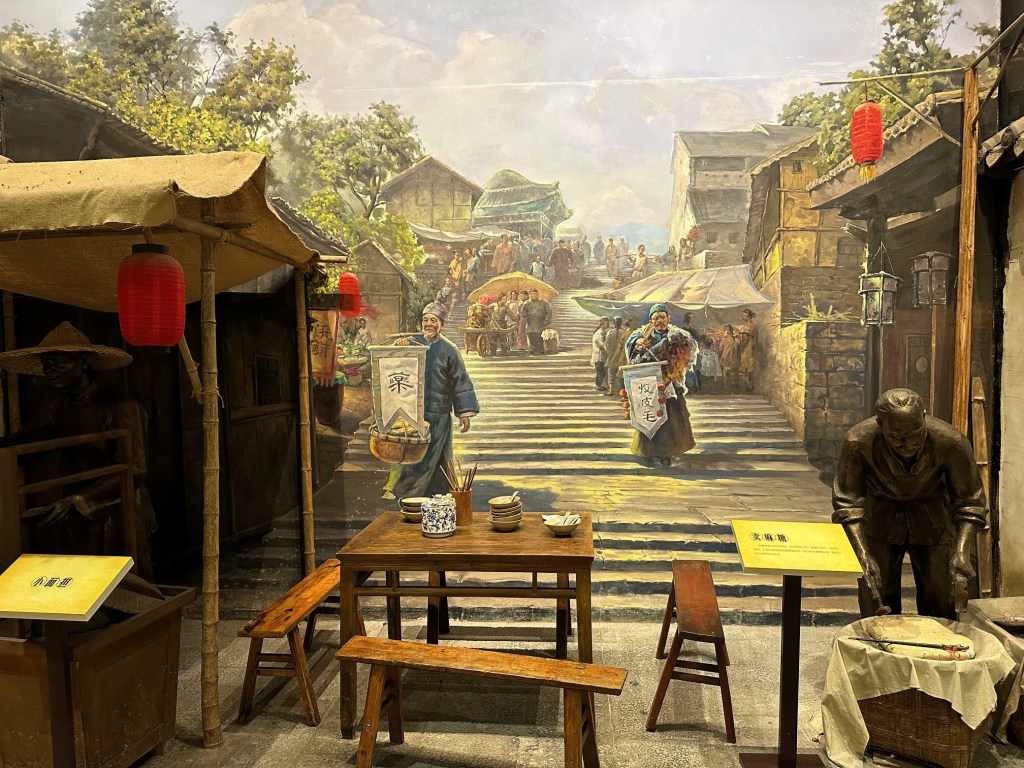
Though a larger study of China museums would be needed to confirm this, the newer generation of history museums, under the guidance of a younger cohort of directors, seems to be doing a better job at representing history neutrally and free of political baggage, that is, representing all notable events regardless of actors and outcomes. Yichang in Hubei Province is historically important as the last main stop on the Yangtze River before the Three Gorges, on the way to Chongqing. Before the early twentieth century, river traffic there had to switch to smaller boats designed for the dangerous rapids, laboriously pulled upstream by teams of trackers. The huge Yichang Museum has the usual dioramas of native inhabitants at their daily tasks over the eras, but when we get to the century of humiliation, there is more attention paid to disturbing events.
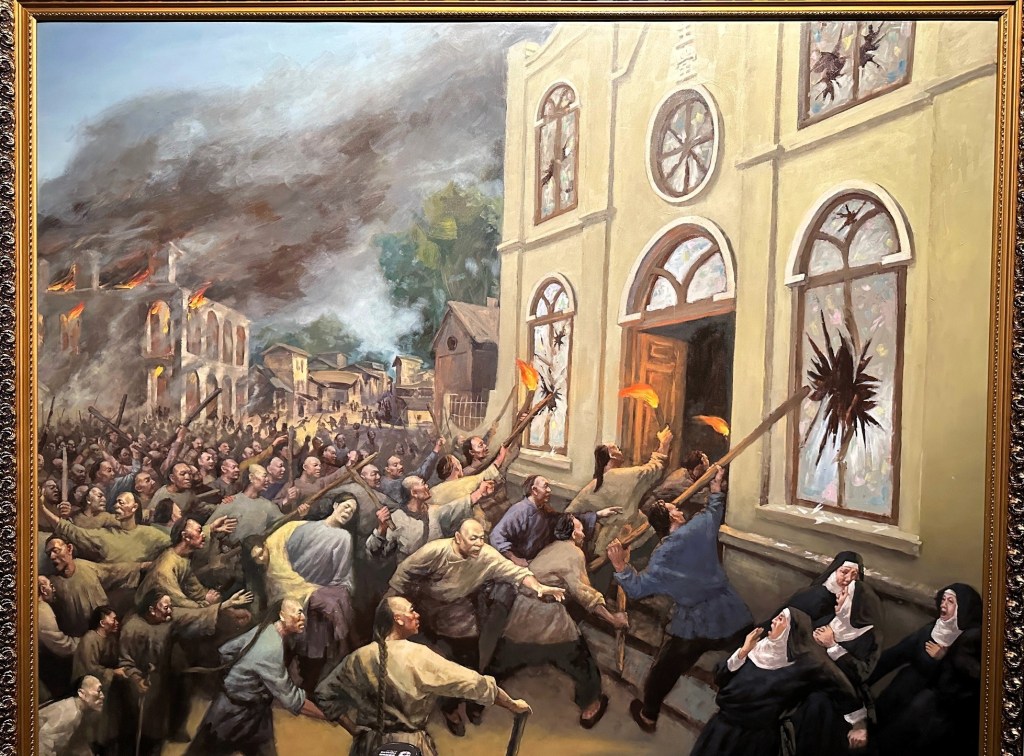
For instance, in 1891, Yichang locals, gripped by unfounded rumors that foreign missionaries were abducting children, attacked a Catholic church when a nun refused to hand over a Chinese orphan. An American missionary in a neighboring church opened fire on the protestors, injuring some. This incited a mob of thousands to burn down several churches and destroy the British Consulate. The incident was one of many similar xenophobic attacks on Chinese and foreign Christians gathering apace around the country and culminating in the Boxer Rebellion of 1899-1901. The Yichang Museum prudently comments little about the event, but that it is represented at all (in the painted reproduction at left) is noteworthy. The painting can be read as either righteous commoners raging against foreign malfeasance or a rabid mob.
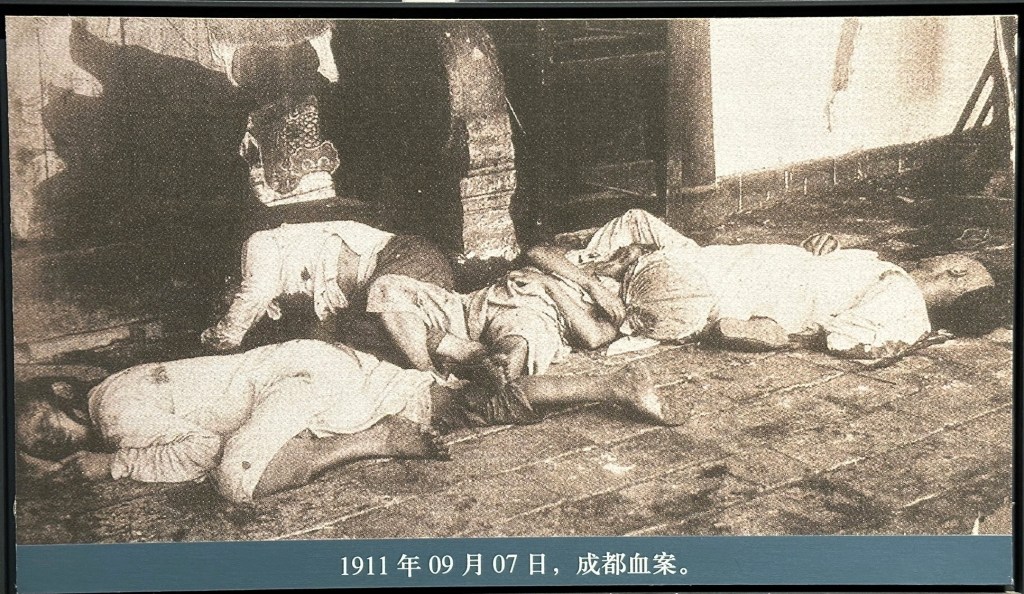
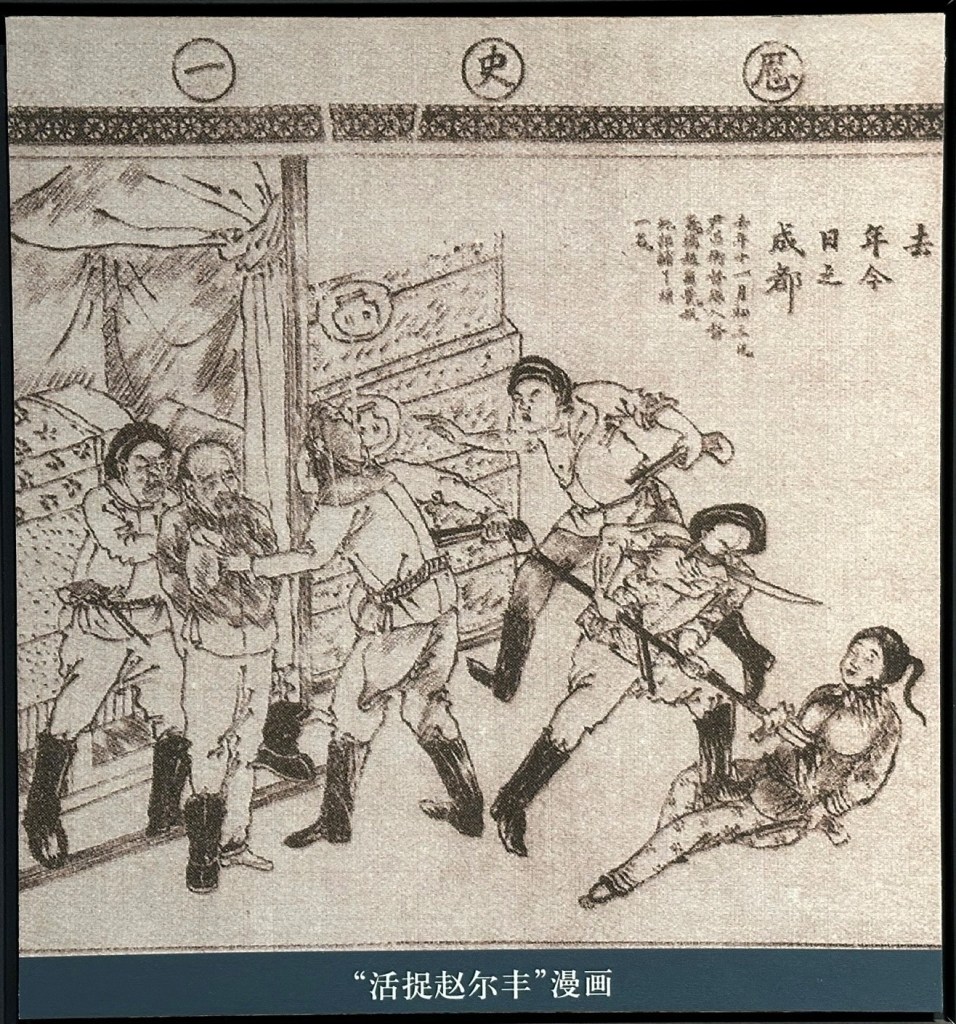
Graphic images of another historical event caught my attention in the same gallery, significantly so as the event did not involve foreign violence, though foreigners were indirectly involved. This emerged out of a planned railway line from Wuhan to Chengdu and passing through Yichang. To finance the railway line, the Qing Government nationalized the project in order to secure international loans, taking it out of the hands of corrupt or incompetent Hubei and Sichuan provincial authorities who were unable to come up with sufficient funds through taxation. Outraged nationalists then organized the Railway Protection Movement to protest foreign bankers’ profiteering off of China’s railway development. On September 7, 1911, Qing official Zhao Erfeng attempted to violently quash the movement, ordering troops to open fire on protesters in Chengdu and days later slaughtering more than a thousand. This sparked the Wuchang Uprising in Wuhan in October. Zhao Erfeng was captured by Xinhai revolutionaries on December 22. Revolts gathered momentum around the country, until the Emperor was forced to abdicate on February 12, 1912. The Railway Protection Movement is considered one of the catalysts in the toppling of the Qing Dynasty—and with it 2,452 years of dynastic rule in China. The Yichang Museum is to be given credit for an honest grappling with the event rather than simplistically molding it into another anti-foreigner chapter in the century of humiliation.
LIVING MUSEUMS AND HUMAN ZOOS
In his history of western museums, Do Museums Still Need Objects? (U Pennsylvania, 2010), Steven Conn traces the shift over the past century and a half among European and North American museums toward reducing the number of objects under display. Museums collectively began to realize that deluging museumgoers with hundreds or thousands of objects soon exhausts them and is counterproductive to the museum experience. This trend continues apace in the digital age. History and science museums are scaling down or dispensing with physical artifacts altogether, relying instead on interactive installations employing video and other media. In Chinese museums as well, dioramas increasingly predominate over glass cases. But dioramas themselves tend to pall in their static lifelessness, and interactive creativity can go much further. In this remaining section, we will examine examples of historical sites and “living museums,” where the museum is extended out into the real world, merging the display space with the authentic environment and incorporating participants, commonly paid performers or actors.
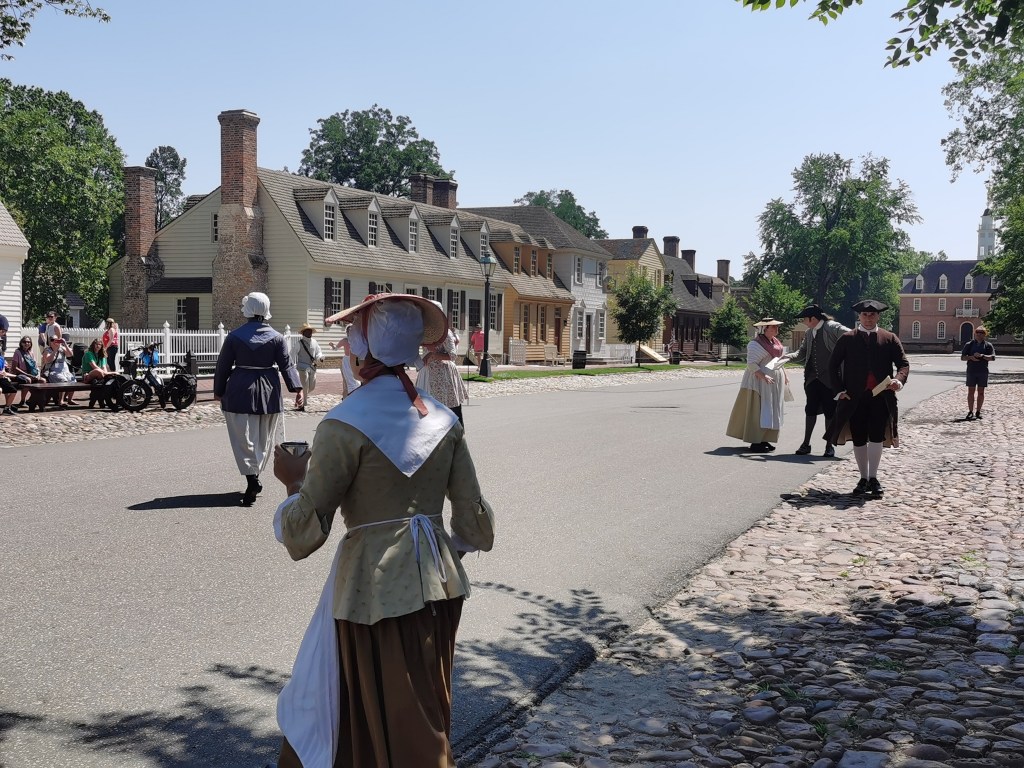
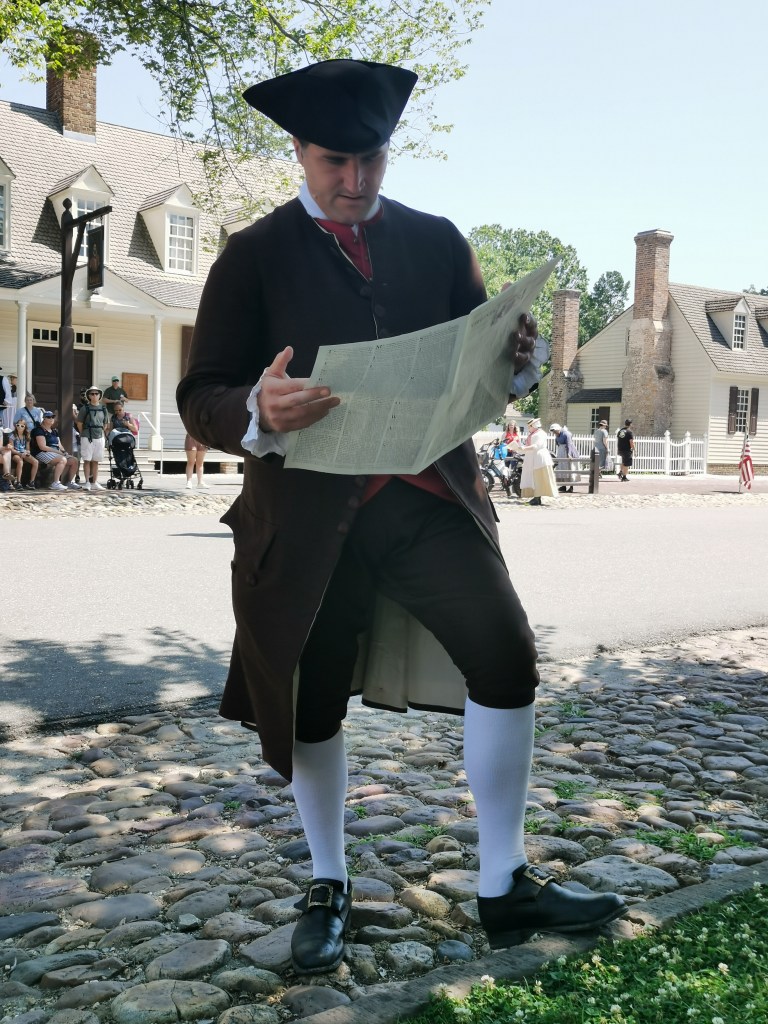
Living museums are not new; hundreds of examples can be found around the world. One notable example is Colonial Williamsburg in Williamsburg, Virginia, USA, a 300-acre historical site of preserved and rebuilt buildings, freezing in time the town as it would have appeared in the late eighteenth century. Shops of all trades line the streets and employ shopkeepers costumed in colonial garb to pose as townsfolk. In a cobbler shop, for example, we see them at work quietly making shoes to the specifications of the time, and they pause to answer questions to onlookers who ask. Out on the street, actors suddenly appear excitedly reading out from a newspaper, news of a rebellion against the King of England: the start of the American Revolution.
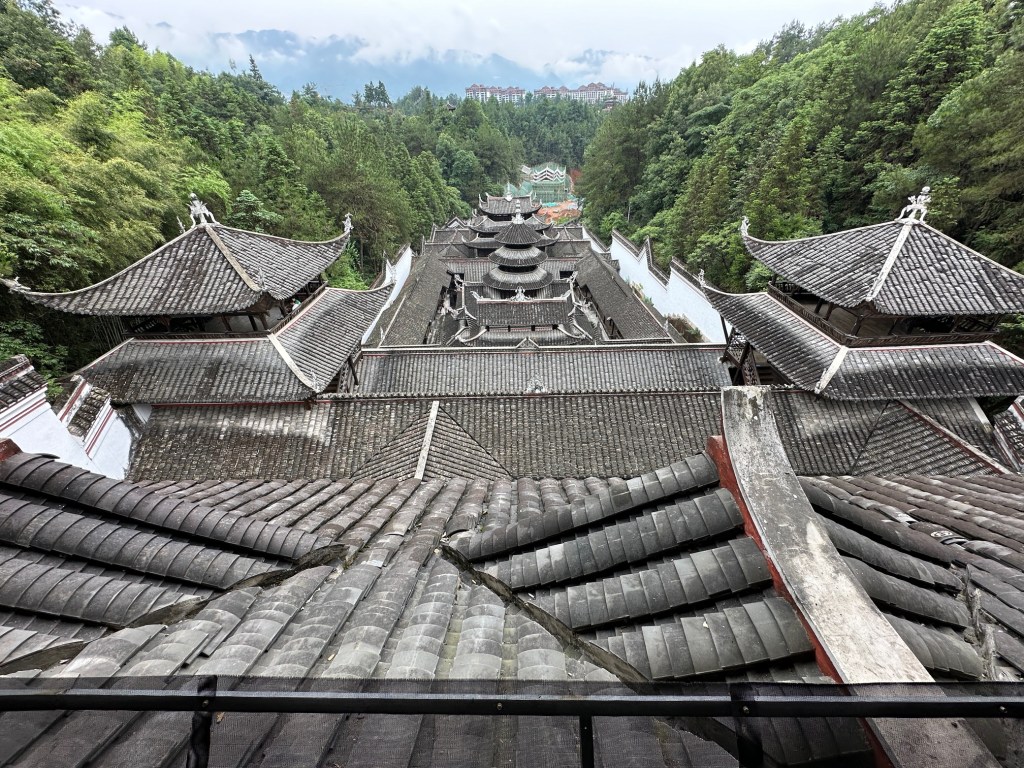
For our Chinese examples, we first return to the ethnic Tujia. One of China’s 55 “minority nationalities” (the majority nationality are the Han), the Tujia are concentrated along the Yangtze River between Yichang and Enshi in southwest Hubei Province as well as in Chongqing and northern Guizhou and Hunan Provinces. In 1999, Enshi City built an unusual structure, the “Enshi Tusi City” (恩施土司城), a castle-like assemblage of tiered buildings from which Tujia chieftains appointed by the Qing Government once ruled their fiefdoms. Although surviving tusi buildings are scattered around the region, this one is fake. In any case, most Tujia these days live in ordinary apartment buildings, work at ordinary jobs, and wear ordinary clothes. Apart from some elderly Tujia women who still go about as before, the people you see walking around Enshi’s streets in traditional dress are tourists who rent the costumes for the day and cosplay being Tujia. The costumes aren’t even authentic but are factory-produced Miao-style garb.
The ethnic confusion, incidentally, was worse in the past. During the Qing Dynasty, there was little official recognition by the dominant Han of ethnic groups in China’s southwest where they were mostly concentrated. As with the racist treatment of American Indians by their European colonizers, they were all contemptuously lumped together with the Miao, and “Miao” was a pejorative, catch-all term. The Miao and other ethnicities suffered genocidal campaigns at the hands of the Qing greater than native Americans did at the hands of the U.S. Government; up to five million Miao and Tujia were killed in the 1854–73 Miao Rebellion alone (Robert D. Jenks, Insurgency and Social Disorder in Guizhou: The “Miao” Rebellion 1854–1873 (U Hawai’i, 1994)).
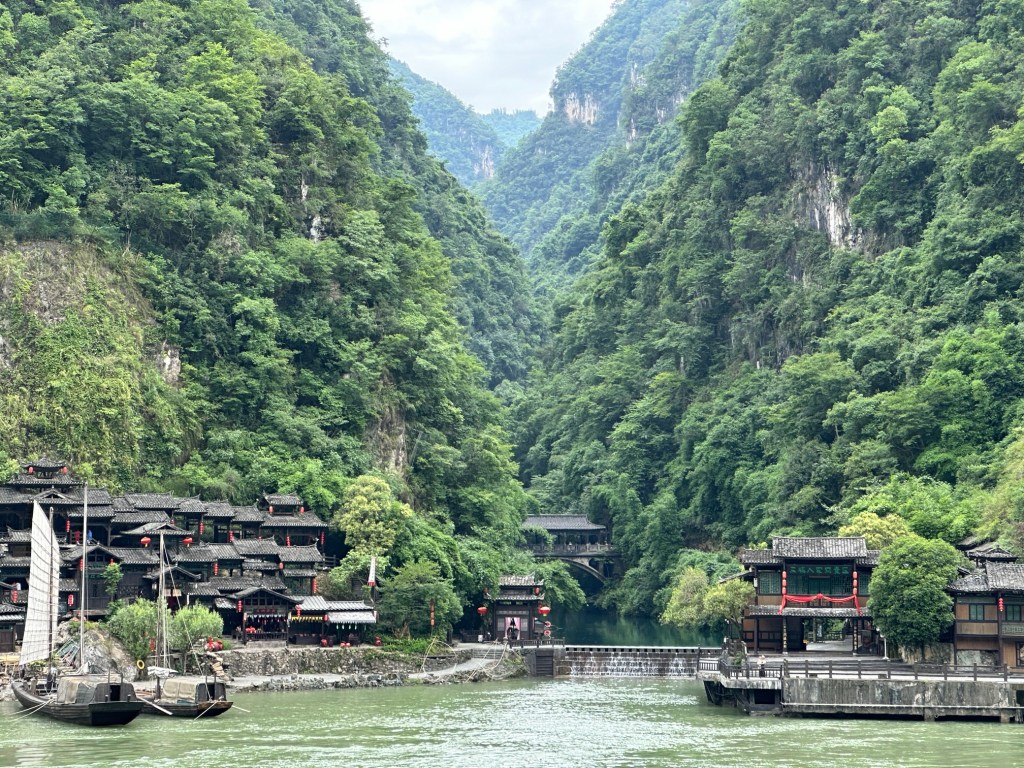
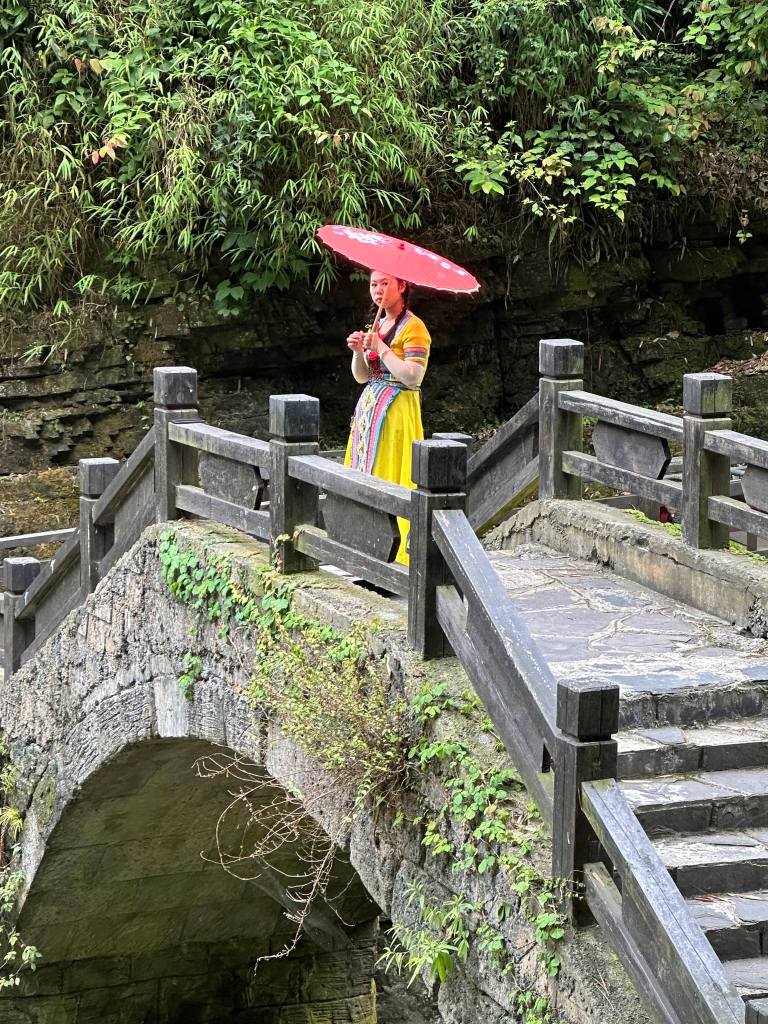
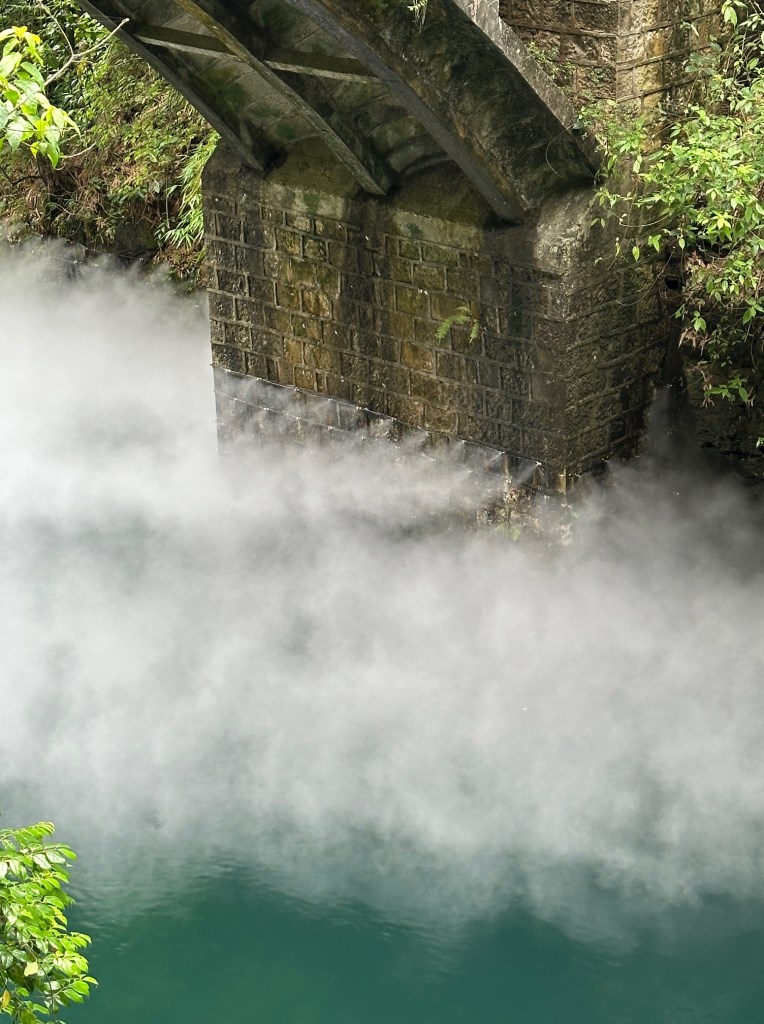
More intriguing, and confounding, is the Three-Gorges Tribe Scenic Spot (三峡人家风景区), on the Yangtze some twenty kilometers upstream from Yichang, where Tujia communities continue to live, though out of view of tourists. The scenic spot is along a misty tributary that meanders down from the hills. The tributary is real but the mist is fake. There is not even an attempt to hide the pipes producing the mist, but no matter, no one cares. Purported ethnic Tujia (they may be Han) are hired to perform as old-time villagers, leisurely wending their way along sampans and posing for tourists. In this sentimentalized theater, a Tujia man plays a bamboo flute while a Tujia girl holding an umbrella waits wistfully on a bridge for her lover. Moments after I photograph her, she checks her cellphone and it’s break time. She’s suddenly trailing right behind us but is oblivious and glued to her phone, before disappearing to wherever it is they go when they’re off work.
The experience called to mind another bizarre form of ethnic theater I heard about but have never witnessed. The rumors probably had some truth to them as I heard them on more than one occasion. In the lush forests close to the Myanmar and Laos borders in southern Yunnan Province, the Dai ethnicity people of Xishuangbanna (historically related to the Tai people of Thailand) are perhaps the most exotically romanticized ethnic group in China. Proverbially and evidently up until the modern era, Dai women bathed naked in ponds and rivers. Sly tour operators came up with the idea of secret visits for male tourists to peer at the bathing women from the bushes and photograph them, who (rumor also had it) were not locals at all but prostitutes from Sichuan hired to masquerade as innocent Dai girls.
Regardless of the rumor’s veracity, it illustrates an interesting distinction on the question of authenticity. If the bathers were not Dai, we have an instance of the “living museum,” defined in Wikipedia as a museum that “recreates to the fullest extent conditions of a culture, natural environment or historical period,” typically employing costumed “historians” to both enact in the first person and, if necessary, provide third-person interpretations of the roles they perform, as in the Colonial Williamsburg and Tujia performances (“historians” in the ideal case, more commonly mere paid performers). If, on the other hand, the bathers were in fact Dai and genuinely bathing as they normally do, we are no longer dealing with a living museum but a “human zoo,” defined in Wikipedia as the “display of people in their so-called ‘natural’ or ‘primitive’ state.” In the Victorian era these displays were popularized in “ethnological expositions,” typically featuring captured Africans exhibited in tableau settings for gaping European audiences. As for any authentic Dai bathers, the “human zoo” designation would apply whether or not knew they were being observed and/or financially remunerated, apprehended as they were in a lived activity and not a performance.
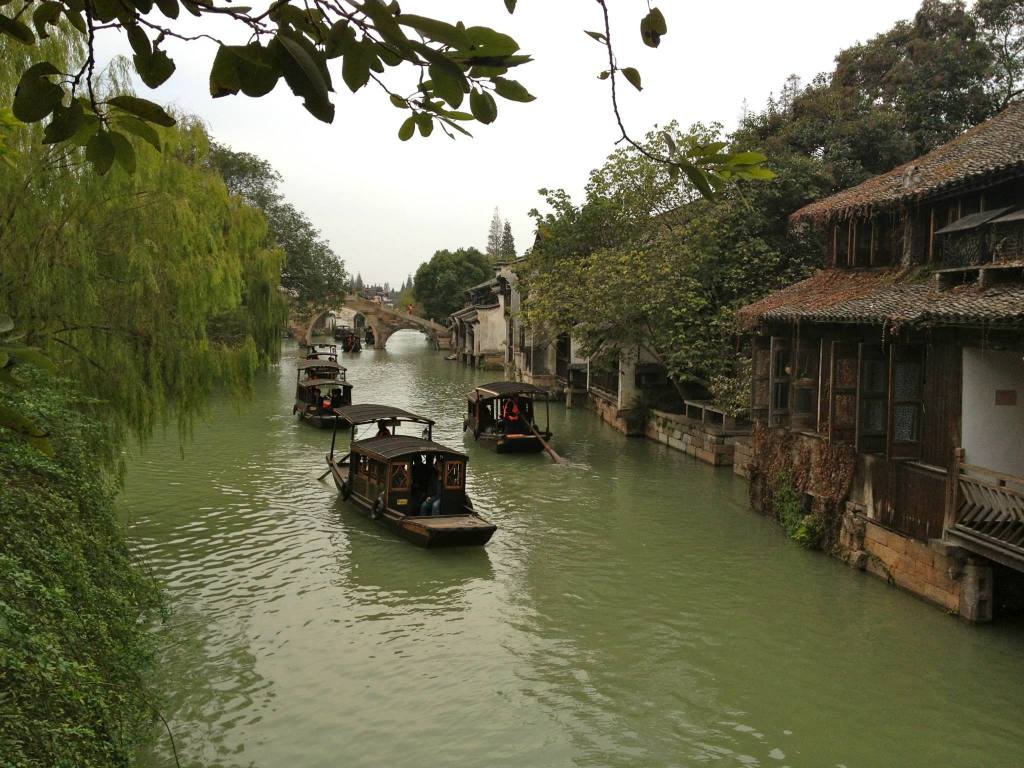
Another example will help clarify the distinction between living museums and human zoos: the phenomenally popular “water towns” (shuizhen) popping up around the country in recent decades, particularly in China’s southeast. They fall along a continuum from real to fake. At one end are the numerous actually existing, well-preserved canal towns that are continually being discovered by tourists. Savvy local authorities may then jump in to restore historic structures and revitalize the community to increase tourism. In the middle of the continuum, a particularly well-preserved town balloons into a thriving commercial site drawing hundreds of thousands of tourists. In this lucky case, they draw a boundary around the town, erect parking lots for cars and tourist buses, and charge a hefty entrance fee. The town natives are soon dwarfed by the service-worker population moving in to open up fancy boutiques and restaurants. Wuzhen in Zhejiang Province is perhaps the most famous example. Its resident population is 12,000 and its service-worker population 60,000. In 2023 it drew 7.7 million visitors—more than the National Museum of China in Beijing (Wuzhen also opened an international conference center). So many tourists deluge Wuzhen that the town expanded into new sections, erecting wholly new buildings along its canals that appear indistinguishable from the original town’s structures. No can tell exactly where the original structures end and the fake structures begin, and again, in China, no one cares.
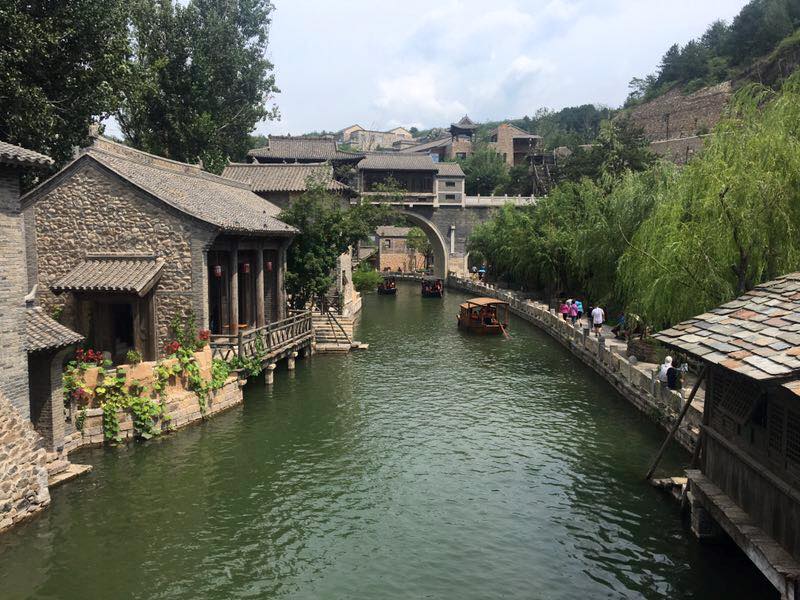
At the other end of the continuum are the water towns that are built wholly from scratch. An example is Gubei Water Town near the Simatai Great Wall outside Beijing, constructed between 2010 and 2014, when it opened to the public. Any average visitor not knowing the town’s provenance wouldn’t be able to tell it had none and was wholly without a history, as it looks convincingly old and is replete with ancient shops selling traditional goods. Its peak year was 2017 when it drew 2.75 million visitors. Tourism has fallen in the post-Covid era, with 1.5 million and 1.3 million in 2023 and 2024 respectively, due partly to the economy and partly to passing fad—the realization among many that the place is only for show. Still, the fake town continues to draw a not inconsiderable number of tourists. Gubei Water Town is an example of a living museum, giving visitors an impressive sense of what life was like in a pre-modern canal town, if only a Disneyesque veneer of one. Wuzhen functions more authentically as a living museum, except for the original residents visible to the tourist crowds through the doors and windows of their homes, who form a human zoo.
For our final example, we visit Lugu Lake in northern Yunnan Province, home of the Mosuo, the world’s only existing matriarchal culture, who traditionally practice a form of polyamory humorously known as “walking marriage” (zouhun), so named because male suitors climb up and back down from female quarters night after night—and not always the same females. In January 2026, the Mosuo Museum (摩梭人博物馆) in Lugu Lake launched a homestay program for interested travelers, and my wife and I tried it out. Here was a neat idea: a living museum (or human zoo?) in which visitors are hosted guests in an intimate diorama come to life. The museum itself is housed in an original Mosuo compound of attached buildings surrounding a square courtyard. Our tour guide was not a Mosuo but a young lady from Inner Mongolia who took the job out of personal interest, and she was well versed and enthusiastic.
According to Chuan-kang Shih’s Quest for Harmony: The Moso Traditions of Sexual Union and Family Life (Stanford UP, 2009), who carried out ethnographic interviews with the Mosuo over many years, the typical Mosuo residence contains a main chamber for the elders and a second-floor corridor with individual rooms for the younger, sexually mature females, reached by ladders on the outside for nightly bonding with visiting males. Mosuo women engage in serial or concurrent relationships with as many boyfriends as they wish and for as long as they wish. Younger men have no rooms of their own as they are always expected to be spending the night with one or other of their female lovers; when they lack a lover, they return to their mother’s household and sleep wherever there is space, such as in the upper floor of a barn. When a woman gives birth, the baby is brought up in her household and the male who impregnated her is freed of any responsibility for raising the child. The child’s acting “father” is his mother’s brother (or brothers). Marriage is an option for couples desiring it yet even in marriage couples are not always monogamous and may openly keep lovers; or they may practice polyandry, where one woman lives with two men.
After 1949, despite lip service paid to equality of the sexes, the Communist Party sought to stamp out these practices and force the Mosuo to adopt monogamous marriage. The Mosuo secretly resisted and continued their practice right up through the present, though there have been changes over the recent decades, with more intermarriage among neighboring ethnic groups, notably the Tibetans, Pumi, and Naxi (but not the Yi, also prevalent in the region, whom the Mosuo apparently dislike). In the 1980s, they were discovered anew. Fascinated Han males made the long trek to Lugu Lake and attempted to hook up sexually with Mosuo women or photograph their late-night assignations. Needless to say, they were rebuffed. Today there are no ready ways to observe the elusive Mosuo.
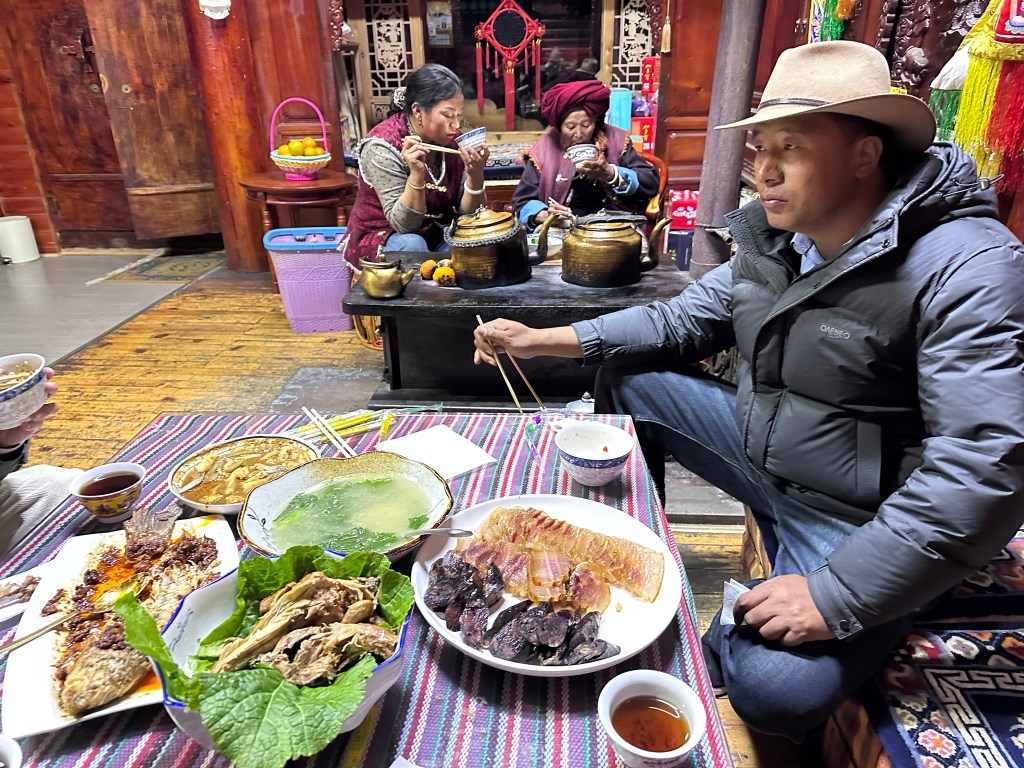
Predictably, the circumstances of our homestay was both Mosuo and not Mosuo. We were accompanied by our guide to Yongning Township, a thirty-minute ride west of Lugu Lake. The Yongning basin and surrounding hills is where the majority of Mosuo live; other Mosuo communities are found on the Sichuan Province side of the lake, which straddles Yunnan and Sichuan. The family lived in a large compound with a white Buddhist stupa. The husband was Tibetan who specialized in Tibetan medicine; his mother was present, quietly chanting sutras and spinning a hand-held Chokhor. The wife was of Pumi ethnicity, who have lived among the Mosuo for so long they are practically treated as Mosuo, though they tend to intermarry with Tibetans. They had two teenage daughters away in school in another city. The couple emphasized that they fully respected Mosuo practices, had Mosuo friends and neighbors, and spoke Mosuo. We stayed in a hotel-like room in a wing they had built for guests. They showed us how they distilled their own spirits with highland barley and we helped them make incense. The wife let us watch her feed their cow, pigs, geese, and hens. Roasted chicken, homemade sausage, and pan-fried fish for dinner; hard-boiled eggs, millet porridge, and steamed barley buns for breakfast.
This was in early January, the month the museum started the homestay program. It seemed clear by the way our guide herself frequently asked the family questions that we were their very first guests, but she wouldn’t admit it.
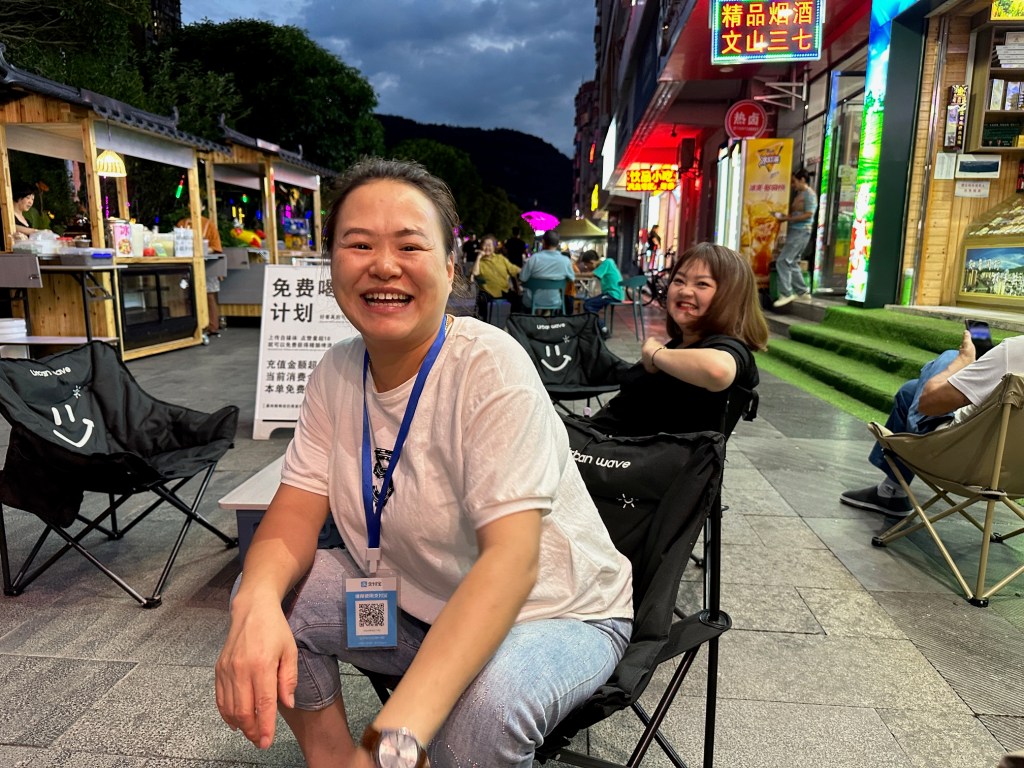
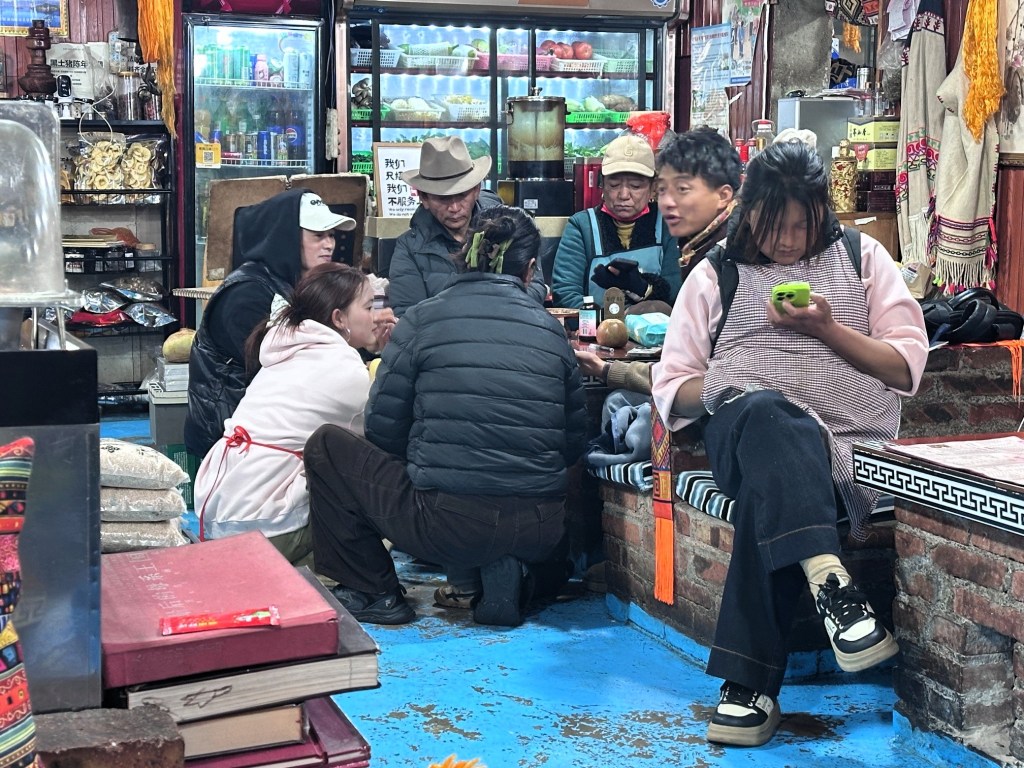
Back in Lugu Lake the next day, we chanced upon what appeared to be a real Mosuo family, who ran a restaurant specializing in Mosuo dishes. As the waitresses ran back and forth serving customers, an elder male sang traditional Mosuo folk songs. The evening rush hour over, the singer and the waitresses and cooks gathered together to relax. Who knows whether they were a consanguineous unit, but there was something about the chummy way they huddled together that suggested they lived together or were closely related. Here we were no longer partaking in a museum experience and this was not a homestay, but it was somehow more convincing.
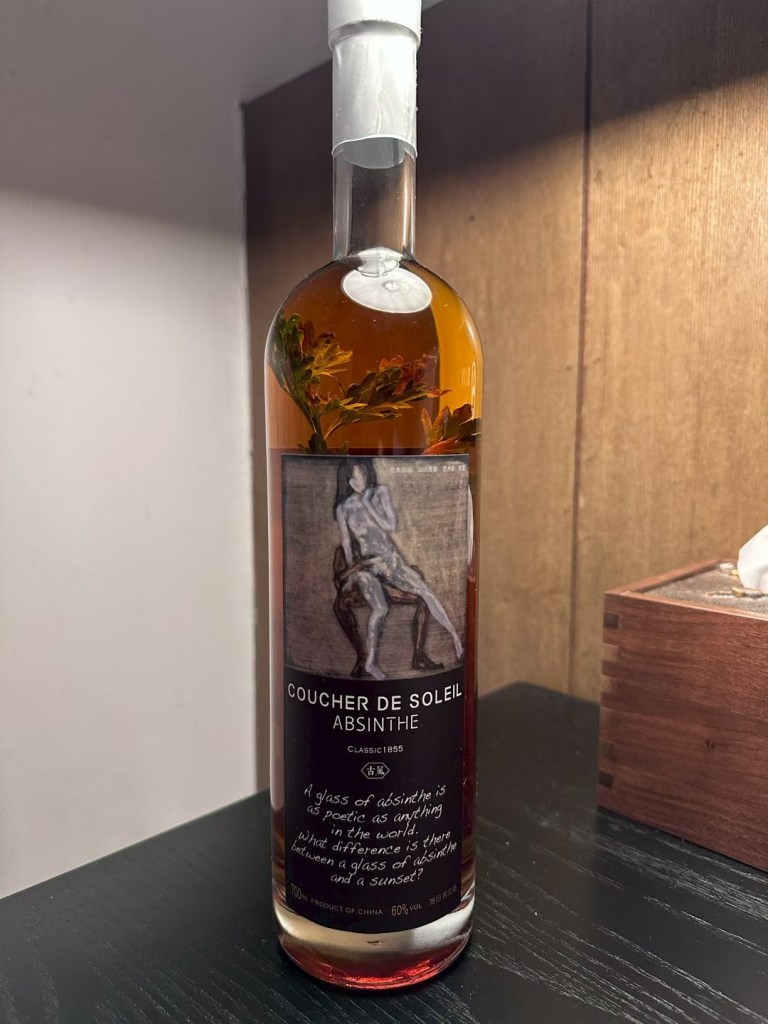
But it was not the end of our Mosuo encounters. After a side trip to Shangri-La, so named by the Chinese Government in 2001 to promote tourism in the Tibetan enclave, we headed south to the ancient city of Lijiang, the seat of the Yulong Naxi Autonomous County. The Mosuo, denied their own minority-nationality status, are officially classified as Naxi, though they are distinct. Obviously, patriarchy doesn’t want to confer official status on a harmless matriarchal group, the very idea of which is existentially threatening. A female artist friend of mine, Loyi, introduced me to a woman living in a village outside Lijiang who made her own absinthe, which I was eager to try, as it would contain thujones, the psychoactive compound that is banned in commercially produced absinthe in Europe. Due to the private nature of our acquaintance, I’ll call her Maomao, after the fifty cats she keeps in her courtyard home. She greeted us dressed in a blue Tibetan robe. When I inquired as to her ethnicity, at first she said she was Naxi, then after a few shots of absinthe it came out that she was actually Mosuo, and Yongning was her ancestors’ hometown (she’s understandably wary of notoriety among strangers). She lives alone in Lijiang and has a teenage daughter, now away in high school in Kunming. As a Mosuo, she doesn’t believe in monogamy and has little contact with her daughter’s father, who was not expected to be involved in raising the child.
And here we leave the museum behind and come full circle back to contemporary Chinese art and the real world in which artists live. A painter herself, Maomao very much lives the artistic life. In earlier years she moved to Shanghai and opened a gallery. One exhibition which took place about a decade ago featured women painters she knew, including Loyi. As the subject was the female nude, she persuaded them to appear naked on opening day, without warning the hundreds in attendance (it was a one-off event). Back in Lijiang, Maomao cultivated cannabis and opium in her garden, until the government started flying drones over people’s property. She switched to growing wormwood to distill absinthe, which is perfectly legal, and created her own brand (Loyi painted the label); she said it won an award in an absinthe competition in Europe. Maomao frequently entertains guests in overnight bashes lasting several days at a time and admitted to cultivating both Chinese and foreign boyfriends.
* * *
Other posts in this series:
Insights into China, Part 1: A walk down the street
Insights into China, Part 2: A meal in a restaurant
Insights into China, Part 3: A stay in a hotel
Insights into China, Part 4: A visit to the library
Insights into China, Part 5: An invitation to a party
Insights into China, Part 6: An afternoon in a café
Insights into China, Part 7: A glimpse inside a school
Insights into China, Part 9: A journey to the hinterland
Also by Isham Cook:
THE TAO OF POISON
“The bold characters, kinetic plot, and rich sense of atmosphere make this epic tale a studied contemplation of how beauty can usher in tragedy and sorrow.” — BookLife Reviews by Publishers Weekly

 ISHAM COOK CHINA
Leave a comment